


KSE100, KSE30 and KMI30 Explained for Beginners
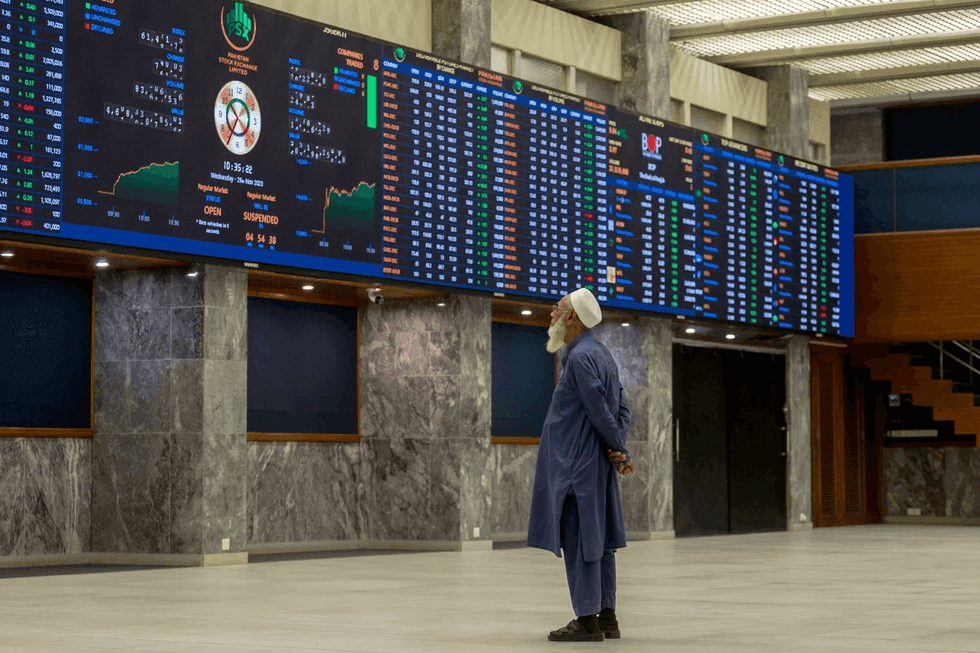
If you follow the Pakistan Stock Exchange (PSX), you will hear phrases like "KSE-100 closed higher", "KMI-30 outperformed" or "KSE-30 moved with blue chips." These names can feel confusing at first because they sound like different exchanges, but they are not. They are indices: scoreboards that track selected groups of listed companies.
This guide explains KSE-100, KSE-30 and KMI-30 in plain language, then gives you a quick reference for other PSX indices such as KSEALL, KMIALL, BKTI, OGTI, PSXDIV20 and strategy indices.
Key takeaways
- An index is a single number that tracks a basket of listed companies.
- KSE-100 is the main PSX benchmark and the number most market headlines refer to.
- KSE-30 is a narrower view of 30 highly liquid companies.
- KMI-30 tracks 30 Shariah-compliant companies.
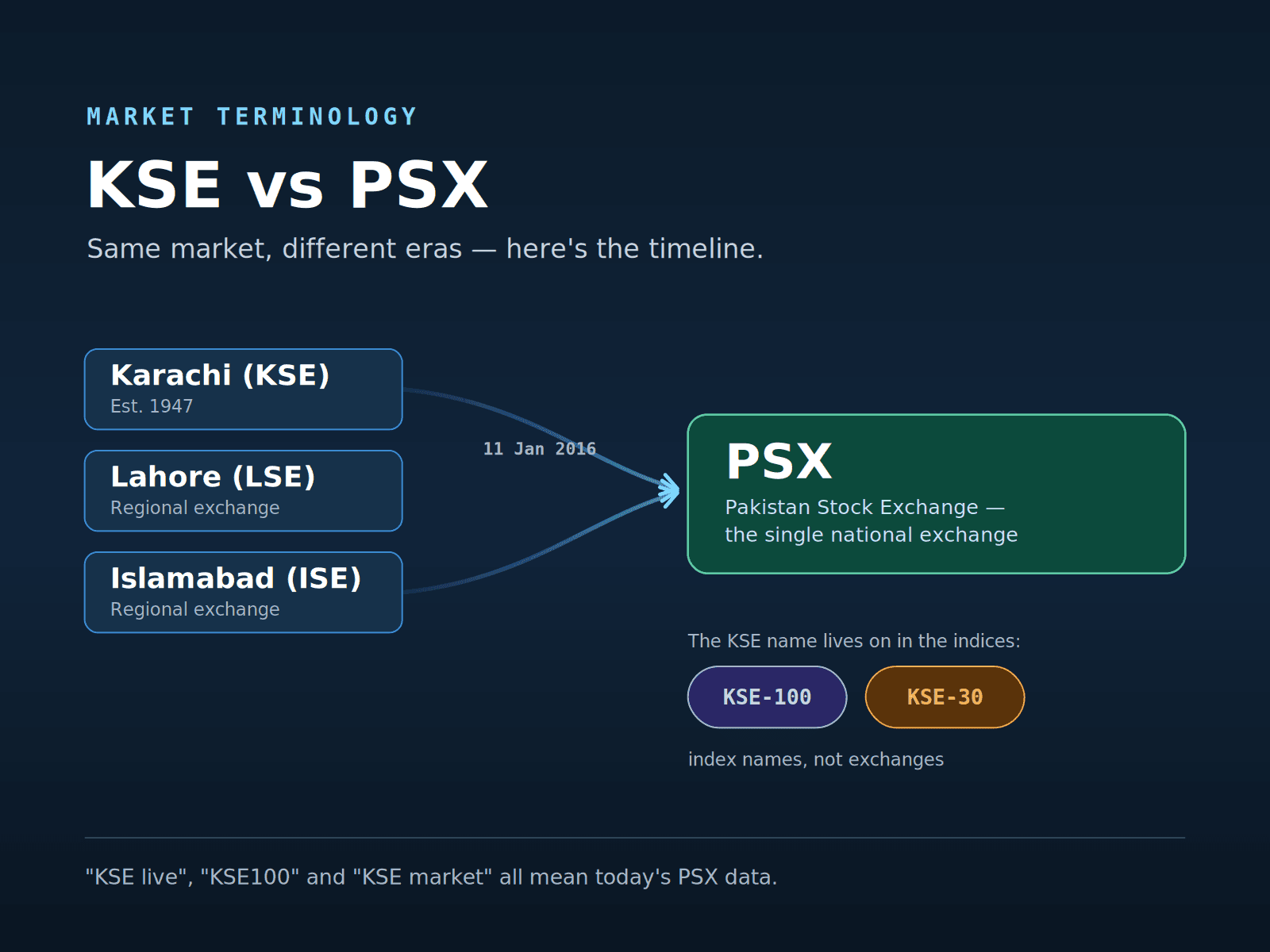
- People still say KSE because the index names carried over from the old Karachi Stock Exchange era.
- An index is not a stock and cannot be bought directly like one company share.
- Indices are useful market context, but they do not tell you whether a specific stock is good, bad, cheap or expensive.
What is a stock market index?
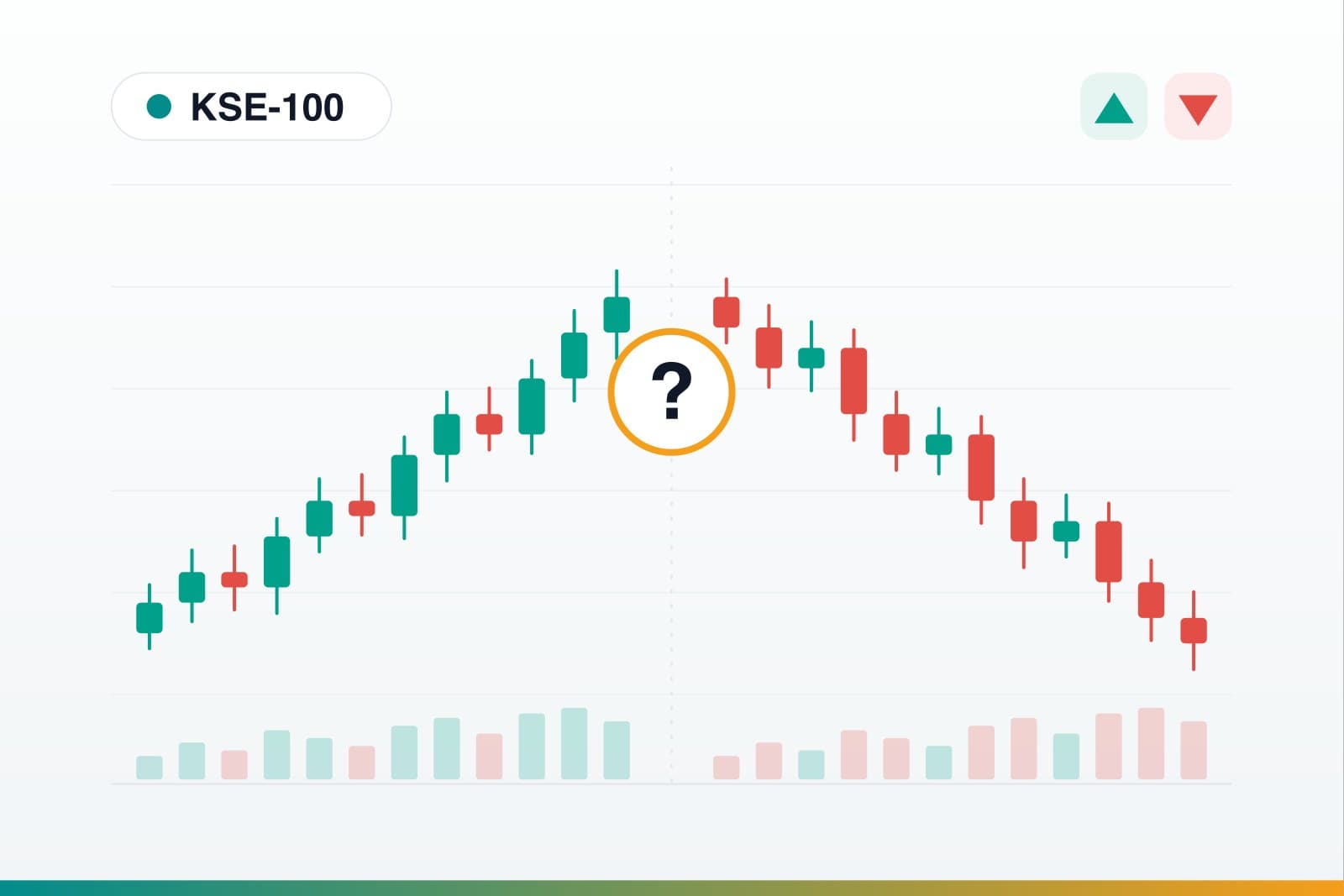
A stock market index is a calculated number that tracks a selected group of companies. Instead of checking hundreds of individual stocks to understand the market, you can look at an index and get a quick read on the direction of a segment of the market.
Think of it like a scoreboard. A cricket team's score does not tell you exactly how every player performed, but it gives you the team's position at a glance. In the same way, an index gives you the movement of a basket of companies, not the full story of every individual stock.
Most major stock indices are weighted, which means larger companies often have more influence than smaller companies. PSX methodology documents explain the exact rules for each index, including which companies can enter, how weights are calculated and when the index is reviewed.
Why KSE names still exist after PSX
Pakistan's exchange structure changed over time. The Karachi Stock Exchange, Lahore Stock Exchange and Islamabad Stock Exchange were integrated into a single national exchange: the Pakistan Stock Exchange (PSX).
The index names, however, kept their history. KSE-100 became the market's famous headline number long before the PSX name became standard. Instead of renaming a widely recognised benchmark, the familiar KSE index names continued.
So today, KSE-100, KSE-30 and KMI-30 are PSX indices. The "KSE" name is historical; the market is now PSX.
KSE100 explained
The KSE-100 is the benchmark most people mean when they say "the market is up" or "the market is down" in Pakistan.
It tracks 100 listed companies and is designed to represent a large part of the Pakistan Stock Exchange. Because it includes companies from across sectors, it is the broad headline view of PSX market sentiment.
Beginners can use KSE-100 to answer a simple question:
Is the broad PSX market generally rising, falling or flat today?
Examples of large listed companies that investors often see in broad-market discussion include OGDC, HBL and LUCK. These are neutral examples only, not recommendations.
KSE30 explained
The KSE-30 is a narrower index. It focuses on 30 highly liquid companies, which means companies whose shares tend to trade actively.
Because it is smaller than KSE-100, KSE-30 can be useful when you want to understand the behaviour of the more actively traded large-cap part of the market.
Beginners can think of it this way:
- KSE-100 is the broad headline view.
- KSE-30 is a tighter view of more actively traded names.
That does not make KSE-30 "better" than KSE-100. It simply answers a different question.
KMI30 explained
The KMI-30 is a Shariah-compliant index. It tracks 30 companies that meet Islamic screening criteria under its methodology.
This makes it especially useful for investors who want to follow the performance of Shariah-screened PSX companies. It can also be useful for comparison: for example, an investor may compare KMI-30 with KSE-100 to see whether Islamic-screened companies are moving differently from the broader market.
KMI-30 is still an index, not a recommendation list. A company being in a Shariah-compliant index does not automatically mean it is a good investment. It only means it meets the index's eligibility and screening rules at that time.
KSE100 vs KSE30 vs KMI30 comparison table
| Index | What it represents | Type of companies included | What beginners usually use it for | Important limitation |
|---|---|---|---|---|
| KSE-100 | Main broad PSX benchmark | 100 large listed companies across sectors | Understanding overall PSX market direction | Big companies can dominate the movement |
| KSE-30 | A focused liquid large-cap view | 30 highly liquid companies | Tracking actively traded market leaders | Narrower than KSE-100, so it does not show full market breadth |
| KMI-30 | Main Shariah-compliant benchmark | 30 Islamic-screened companies | Following Shariah-compliant market movement | It excludes companies that do not pass screening, so it is not a full-market index |
How beginners should use indices
For beginners, indices are best used as context, not as buy or sell signals.
You can use them to understand:
- Market direction: Is the overall market rising or falling?
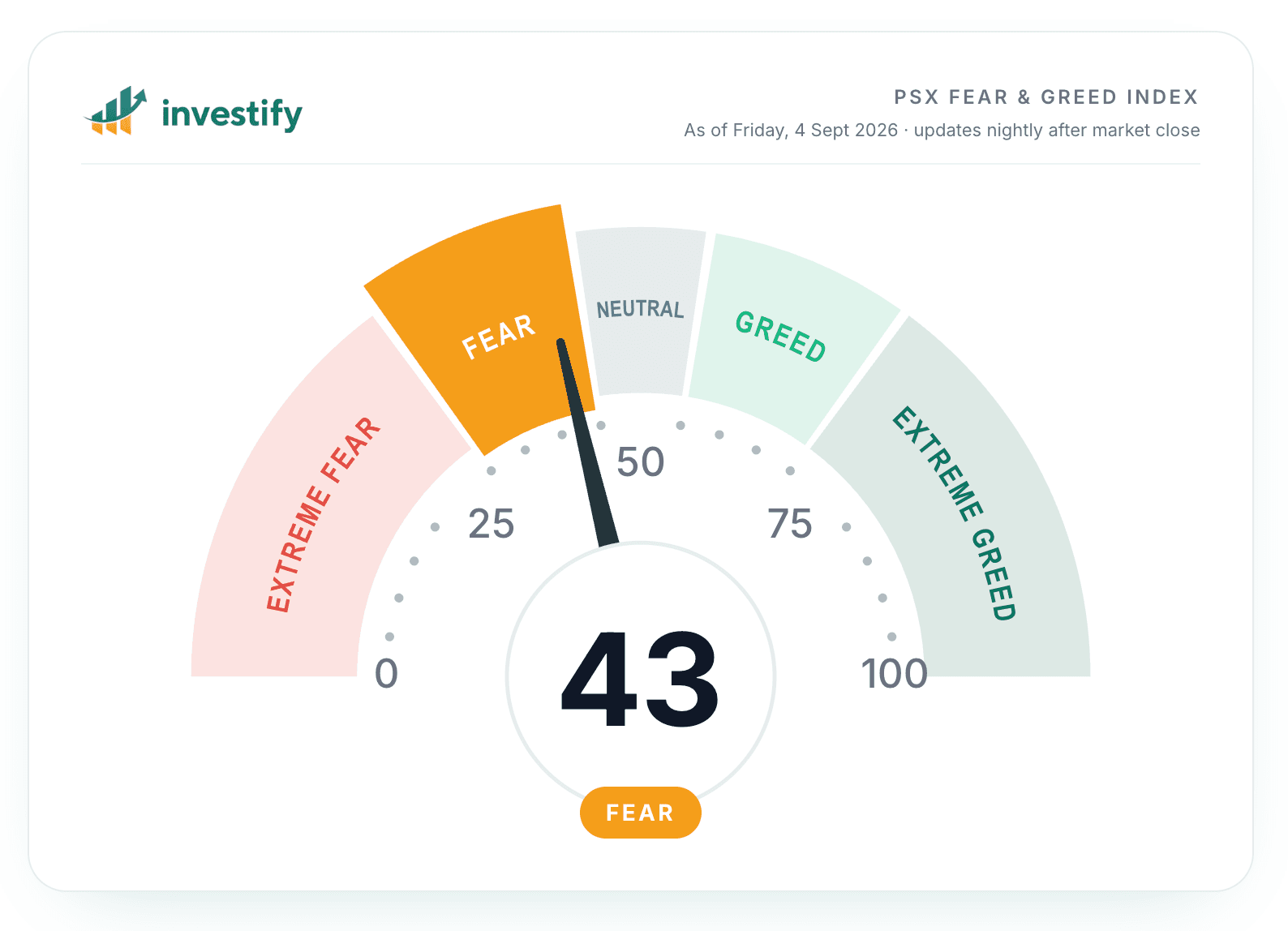
- Market mood: Are investors broadly optimistic or cautious today?
- Sector context: Are banks, oil and gas companies or Islamic-screened stocks moving differently?
- Watchlist context: Did your stock move because the whole market moved, or because of company-specific news?
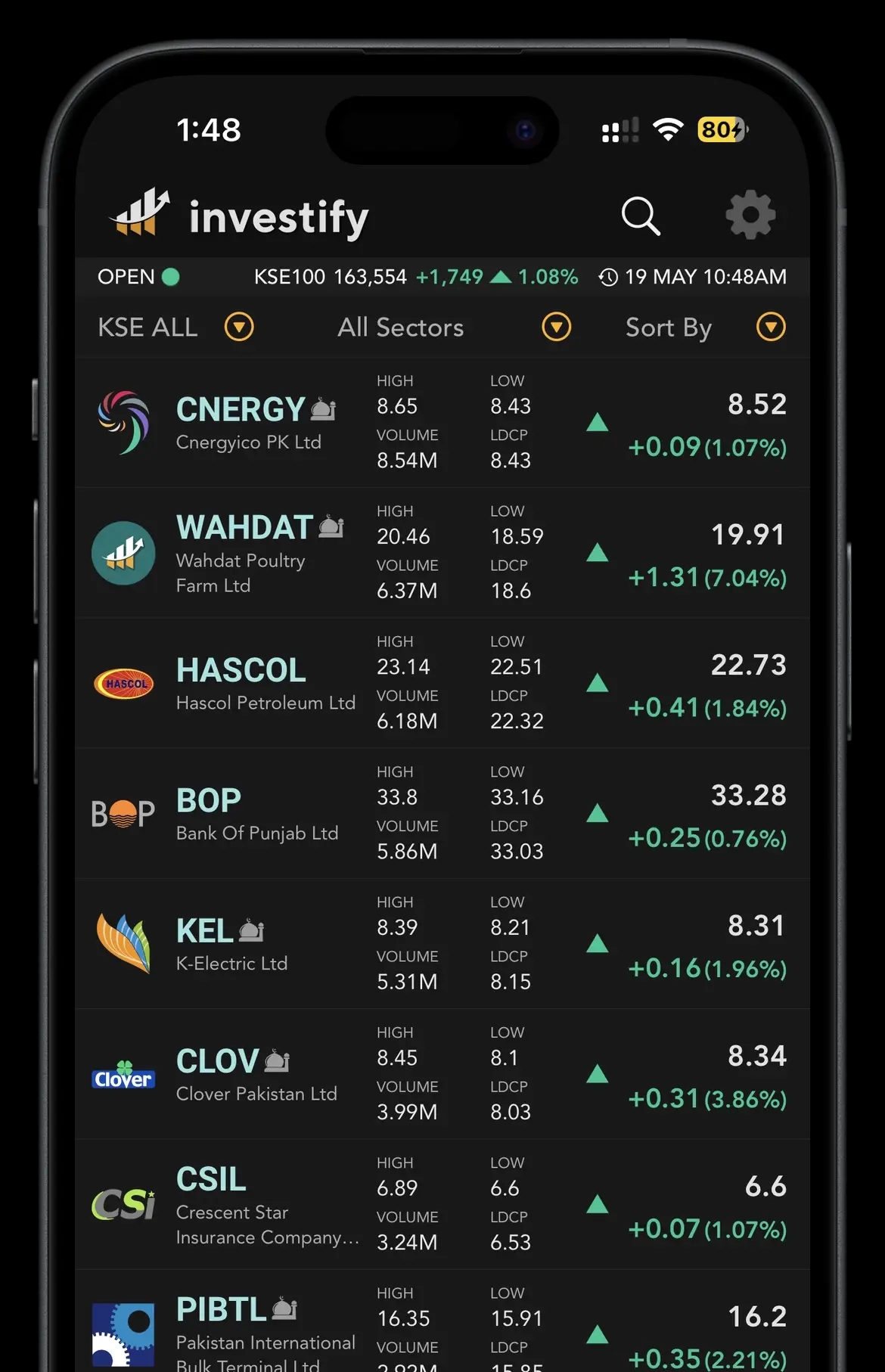
On Investify, you can follow index pages alongside stock pages, charts, watchlists, announcements and market news. That helps you move from the broad market view to the individual company view without losing context.
Use Investify for your daily PSX workflow
Open market data, stock pages, charts, news, announcements, watchlists and portfolio tracking from one Investify account.
Open PSX indicesWhy indices can move differently from your stocks
This is one of the most important beginner lessons: the index and your stock are not the same thing.
This happens because every index has a specific composition and weighting method. Some companies have more influence than others. Some sectors matter more in one index than another. That is why index movement is useful, but never enough on its own. And when the index itself makes a big move, the causes are usually one of a handful of recurring forces - we break them down in why is the PSX up or down today.
Other PSX indices beginners may see
Besides KSE-100, KSE-30 and KMI-30, PSX publishes several other indices. You do not need to memorise all of them, but recognising the names helps when you see them on market dashboards.
Common examples include:
- KSEALL / All Share Index: a broad view of listed companies.
- KMIALL / PSX-KMI All Share Index: a broader Shariah-compliant market view.
- BKTI: a banking-sector tradable index.
- OGTI: an oil and gas-sector tradable index.
- PSXDIV20: a dividend-focused index.
- NITPG, UPP9, NBPPG, JSMF, ACIETF, MZNP and MII30: strategy, thematic or fund-linked benchmark indices with their own methodologies.
Each index has its own rules. If you need exact construction details, always check the official PSX methodology document.
Full PSX index reference table
The table below is a beginner-friendly reference for official PSX indices and related index benchmarks visible through PSX sources. For exact formulas, eligibility rules and rebalancing details, use the official PSX methodology documents.
| Index | Plain-English description | Who might look at it | Category |
|---|---|---|---|
| KSE-100 | Main PSX benchmark that tracks 100 large listed companies across sectors | Anyone wanting the headline market direction | Broad market |
| KSE-30 | Tracks 30 highly liquid listed companies | Investors watching actively traded large caps | Broad market / large-cap liquidity |
| KSEALL / All Share Index | Broad all-share market view | Investors who want wider market breadth | Broad market / all-share |
| KMI-30 | Tracks 30 Shariah-compliant companies | Islamic-screened market watchers | Islamic |
| KMIALL / PSX-KMI All Share Index | A broader Shariah-compliant all-share view | Investors who want wider Islamic-screened market context | Islamic / all-share |
| BKTI / Banking Sector Tradable Index | Tracks the tradable banking-sector segment | Investors following banks | Sector-focused |
| OGTI / Oil and Gas Tradable Sector Index | Tracks the tradable oil and gas segment | Investors following oil and gas | Sector-focused |
| PSXDIV20 / PSX Dividend 20 | Tracks dividend-focused companies under PSX methodology | Investors studying dividend-focused market behaviour | Dividend-focused |
| NITPG / NIT Pakistan Gateway Index | A strategy/fund benchmark based on selected KSE-100 constituents | Investors following the related benchmark methodology | Thematic / strategy-based |
| UPP9 / UBL Pakistan Premier Index | A strategy benchmark focused on selected large companies | Investors following the related benchmark methodology | Thematic / strategy-based |
| NBPPG / NBP Pakistan Growth Index | A strategy benchmark based on selected KSE-100 companies | Investors following the related benchmark methodology | Thematic / strategy-based |
| JSMF / JS Momentum Factor Index | A momentum-style benchmark | Investors studying momentum-based index behaviour | Thematic / strategy-based |
| ACIETF / Alfalah Consumer Index ETF benchmark | A consumer-focused benchmark used for a related ETF | Investors tracking consumer-sector ETF context | Thematic / ETF-linked |
| MZNP / Meezan Pakistan Index | An Islamic strategy benchmark connected with KMI-30-style selection rules | Islamic-screened benchmark watchers | Islamic / strategy-based |
| MII30 / Meezan Islamic Index 30 | A Shariah-compliant benchmark using selected companies from the Islamic universe | Islamic-screened benchmark watchers | Islamic / strategy-based |
Educational note
This article is for general education only. It explains what Pakistan Stock Exchange indices are and how they differ. It is not investment, financial, legal or tax advice. It does not say any index is best, and it does not recommend buying or selling any security, ETF, fund or product.
Company symbols mentioned in this article are neutral examples of listed companies, not recommendations. Index definitions are summarised from PSX sources and methodology documents; constituents, weights and selection rules can change over time. For exact construction details, consult the relevant PSX methodology documents and qualified professionals where needed. Investify is a market-data and portfolio app, not a broker.
The bottom line
PSX indices are scoreboards for different slices of the market. KSE-100 is the headline benchmark, KSE-30 narrows the view to liquid large-cap names, and KMI-30 tracks Shariah-compliant companies. Around them, PSX also publishes all-share, Islamic, sector, dividend and strategy indices.
Use indices to understand the market's direction, not as a shortcut for investment decisions. The next step is always to look at the actual company: its price, chart, fundamentals, announcements and news.
Related reading
Sources and references