



Dividend Stocks vs Growth Stocks on PSX: A Beginner's Guide
Walk into any conversation among Pakistani investors and you will eventually hear the same friendly debate: should you buy shares that pay you regular cash, or shares that you hope will climb in value over the years? This is the classic split between dividend stocks and growth stocks, two different ways of trying to build wealth on the Pakistan Stock Exchange (PSX).
Neither approach is better in the abstract. They suit different goals, temperaments and life stages, and many sensible investors end up blending both. This guide explains what each style is, how they tend to behave in the PSX context, their pros and risks, and how factors like inflation and interest rates push and pull on each.
Key takeaways
- Dividend stocks aim to pay regular cash, usually from established and profitable companies.
- Growth stocks aim to grow in value by reinvesting profits rather than paying most of them out.
- On PSX, banks, fertiliser, oil and gas exploration, utilities and some autos are commonly associated with dividends.
- Technology and selected cyclical or expanding companies are more often where investors look for growth.
- Interest rates matter a lot in Pakistan. High policy rates make dividend yields compete with bank deposits and government instruments, and can pressure growth valuations.
- A high dividend yield is not automatically good, and a growth story is not automatically valuable.
- The right mix depends on your goals, time horizon and risk tolerance, after reviewing fundamentals, payouts, earnings growth, debt and valuation.
What are dividend stocks?
A dividend stock is a share in a company that distributes part of its profits back to shareholders as cash, called a dividend. On PSX, dividends are usually declared through formal company announcements and may be paid quarterly, half-yearly, annually or as special payouts, depending on the company and its board.
Dividend-paying companies are usually mature and consistently profitable. They generate more cash than they need to reinvest, so they return some of it to owners. The headline number investors watch is the dividend yield: annual dividend per share divided by share price, expressed as a percentage. If a share priced at PKR 100 pays PKR 10 a year in dividends, its yield is 10%.
Pakistan has a notably strong dividend culture. Many large-cap PSX companies have, in some periods, offered dividend yields in the high single digits or low double digits, partly reflecting Pakistan's higher interest-rate environment. For income-focused investors, that cash flow is the main attraction.
What are growth stocks?
A growth stock is a share in a company expected to expand its earnings, revenue or market position faster than average. Instead of paying out most of their profits, these companies typically reinvest them into new capacity, products, technology or market expansion.
Because the payoff is meant to come from a rising share price rather than regular cash, growth stocks often pay little or no dividend. Investors accept that trade-off in exchange for the potential of capital appreciation. Growth stocks also tend to trade at higher valuations, such as higher price-to-earnings ratios, because the market is pricing in future expansion that has not fully happened yet.
The flip side is obvious once stated: growth is a hope, not a promise. If the expected expansion does not materialise, or the broader market turns cautious, a growth stock can fall sharply, and there may be no dividend cushioning the wait.
Key differences between dividend and growth stocks
The core distinction is where your return is supposed to come from: regular cash income from dividends versus an increase in the share's value. That single difference affects the maturity of the companies, how profits are used, typical valuations, volatility and the kind of investor each style tends to suit.
| Feature | Dividend stocks | Growth stocks |
|---|---|---|
| Main source of return | Regular cash dividends | Rise in share price over time |
| Use of profits | Paid out to shareholders | Reinvested into the business |
| Typical company stage | Mature, established, steady earnings | Expanding, sometimes younger |
| Common PSX sectors | Banks, fertiliser, oil and gas E&P, utilities, some autos | Technology, certain cyclicals, expanding firms |
| Valuation tendency | Often lower P/E | Often higher P/E |
| Volatility | Generally steadier, but not risk-free | Often more volatile |
| Income while holding | Yes, if dividends continue | Usually little or none |
| Main risk | Dividend cuts; price stagnation | Expansion disappoints; sharp price falls |
| Often suits | Income-focused, conservative, retirees | Long-horizon, risk-tolerant, often younger investors |
Treat this as a general pattern, not a rule. Plenty of companies sit in between, paying a modest dividend while still growing. A single company can also shift category over its lifetime.
How each style behaves in the PSX context
The Pakistani market has its own character, and that shapes how these styles play out.
Dividend names cluster in specific sectors. On PSX, reliable dividend payers have historically been concentrated in commercial banks, fertiliser, oil and gas exploration, power and utilities, and some established autos and consumer names. These are often large, cash-generative businesses, and several have long records of regular payouts. This is why income investors in Pakistan often gravitate towards blue-chip KSE-100 constituents in these sectors.
Growth is a smaller but real theme. Pure growth stocks in the Western sense are less common on PSX, but the technology sector and certain expanding cyclical companies are where investors more often look for capital appreciation rather than income. Some cyclical sectors, such as cement, can behave like growth or value plays depending on where the economy is in its cycle.
The whole market is macro-driven. PSX is heavily influenced by Pakistan's macroeconomic story: interest rates, inflation, the rupee, the external account and IMF-related reforms. Over long holding periods the market has moved through powerful upcycles and painful downturns. Both dividend and growth stocks feel that macro weather, just in different ways.
Pros and risks of dividend investing
Potential advantages:
- Regular cash flow that investors can spend or reinvest.
- Relative steadiness, because established dividend payers are often less speculative than early-stage growth names.
- A signal of discipline, since a long, consistent dividend record can indicate a mature, cash-generative business.
- Reinvestment compounding, where dividends are used to buy more shares over time.
Risks to weigh:
- Dividend cuts. If earnings fall, the payout can be reduced or suspended, and the share price may fall too.
- The high-yield trap. A very high yield may reflect a falling share price, not generosity. Always check whether earnings cover the dividend.
- Limited growth. Companies paying out most profits may grow more slowly, so capital gains can be modest.
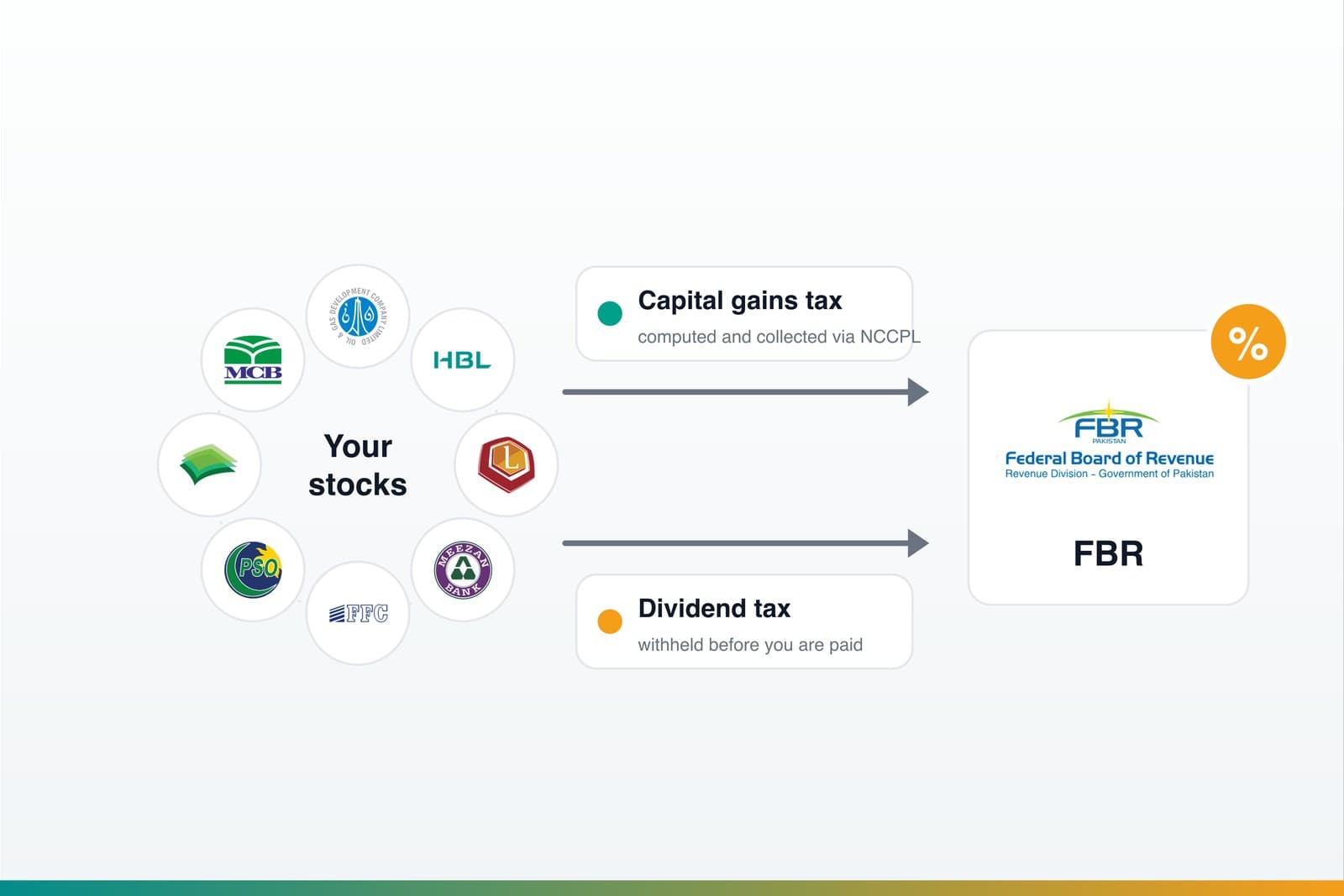
- Tax on dividends. In Pakistan, dividends are subject to withholding tax, and filer status can affect after-tax income. Check current FBR rules because tax treatment changes over time.
Pros and risks of growth investing
Potential advantages:
- Higher capital-appreciation potential if the company expands as hoped.
- Compounding inside the business, because reinvested profits can fund expansion.
- No reliance on payout decisions, because returns do not depend on the board declaring a dividend.
Risks to weigh:
- No income cushion. While you wait, you typically receive little or no cash.
- Higher volatility. Growth names can swing sharply when expectations change.
- Valuation risk. Paying a high price for expected growth leaves less room for disappointment.
- Fewer pure options on PSX. The Pakistani market has a smaller pool of classic growth stocks, so diversification purely within growth can be harder.
Which type may suit which investor?
There is no universal answer, but some general tendencies are useful.
Conservative investors often lean towards dividend stocks for their steadier profile and regular income, accepting slower capital growth in return.
Income-focused investors, for example those wanting cash flow to supplement other income, naturally favour dividends because that is the whole point.
Long-term investors with many years ahead can often tolerate the swings of growth stocks, giving expansion time to play out. Many also hold dividend payers and reinvest the cash.
Younger investors with a long horizon and stable income elsewhere are sometimes more comfortable with growth and higher volatility, since they have time to ride out downturns.
In practice, many investors blend both. Dividend payers can provide stability and income, while a measured allocation to growth can provide potential appreciation. The balance should reflect your goals, time horizon and how much volatility you can genuinely handle.
How inflation, interest rates, earnings and cycles affect both
Four forces shape both styles, and they are especially powerful in Pakistan.
Interest rates. This is one of the biggest levers in the Pakistani context. When the State Bank's policy rate is high, bank deposits and government instruments offer attractive lower-risk returns, so dividend yields must compete with those alternatives. High rates also tend to pressure growth valuations because future earnings are worth less in today's terms and borrowing costs rise. When rates fall, the reverse often happens: dividend stocks can re-rate higher and growth valuations get more room to expand. Banks are a special case because their earnings are directly tied to the rate environment.
Inflation. High inflation erodes the real value of a fixed dividend, so an income stream that looks generous can lose purchasing power if prices are rising quickly. It also raises company costs. Growth companies that can raise prices or expand faster than inflation may offer some protection, but inflation often comes with higher rates, which works against them.
Company earnings. Everything ultimately rests on profits. Dividends are only sustainable if earnings consistently cover them; growth is only real if earnings actually expand. This is why checking earnings trends, debt and cash flow matters for both styles.
Market cycles. PSX moves through cycles driven by the economy, politics and global factors. In downturns, even solid dividend payers can fall in price, though the income may continue. Growth names often fall harder when investors become risk-averse. In recoveries, growth and cyclicals can lead. No style is immune to the cycle.
Practical PSX examples by sector
These examples are illustrative only and are not buy or sell recommendations.
- Banks: Often prominent dividend payers, with payouts and earnings linked to the interest-rate cycle.
- Fertiliser: A classic Pakistani dividend sector, known for established companies with histories of regular payouts.
- Oil and gas exploration: Cash-generative names that can feature among dividend payers, though earnings move with commodity prices, receivables and the rupee.
- Power and utilities: Some companies here can offer attractive yields, but sector-specific risks such as circular debt matter.
- Cement and other cyclicals: Can behave like growth, value or cyclical recovery plays tied to construction activity, interest rates and infrastructure demand.
- Technology: The sector most associated with a growth orientation on PSX, where investors usually look more for expansion than dividends.
- Autos and consumer: A mixed bag. Some established names pay dividends, while demand-sensitive names can behave more cyclically.
These are sector tendencies, not fixed labels. Any individual company should be judged on its own fundamentals.
Common mistakes investors make
- Chasing the highest dividend yield blindly. A sky-high yield may signal a falling price or unsustainable payout.
- Assuming dividends are guaranteed. They can be cut if profits or cash flow weaken.
- Overpaying for growth. Buying a growth story at any price ignores valuation risk.
- Ignoring tax. Dividend withholding tax and filer status affect real income.
- Confusing low share price with cheap, or high yield with quality. Price and yield do not prove business strength.
- Forgetting diversification. Concentrating only in one style or one sector leaves you exposed if that area struggles.
- Mismatching style to goals. Holding volatile growth names when you actually need stable income can create stress and poor decisions.
- Skipping the homework. Buying on tips instead of reviewing fundamentals, payouts, earnings growth, debt and valuation is not a process.
Use Investify for your daily PSX workflow
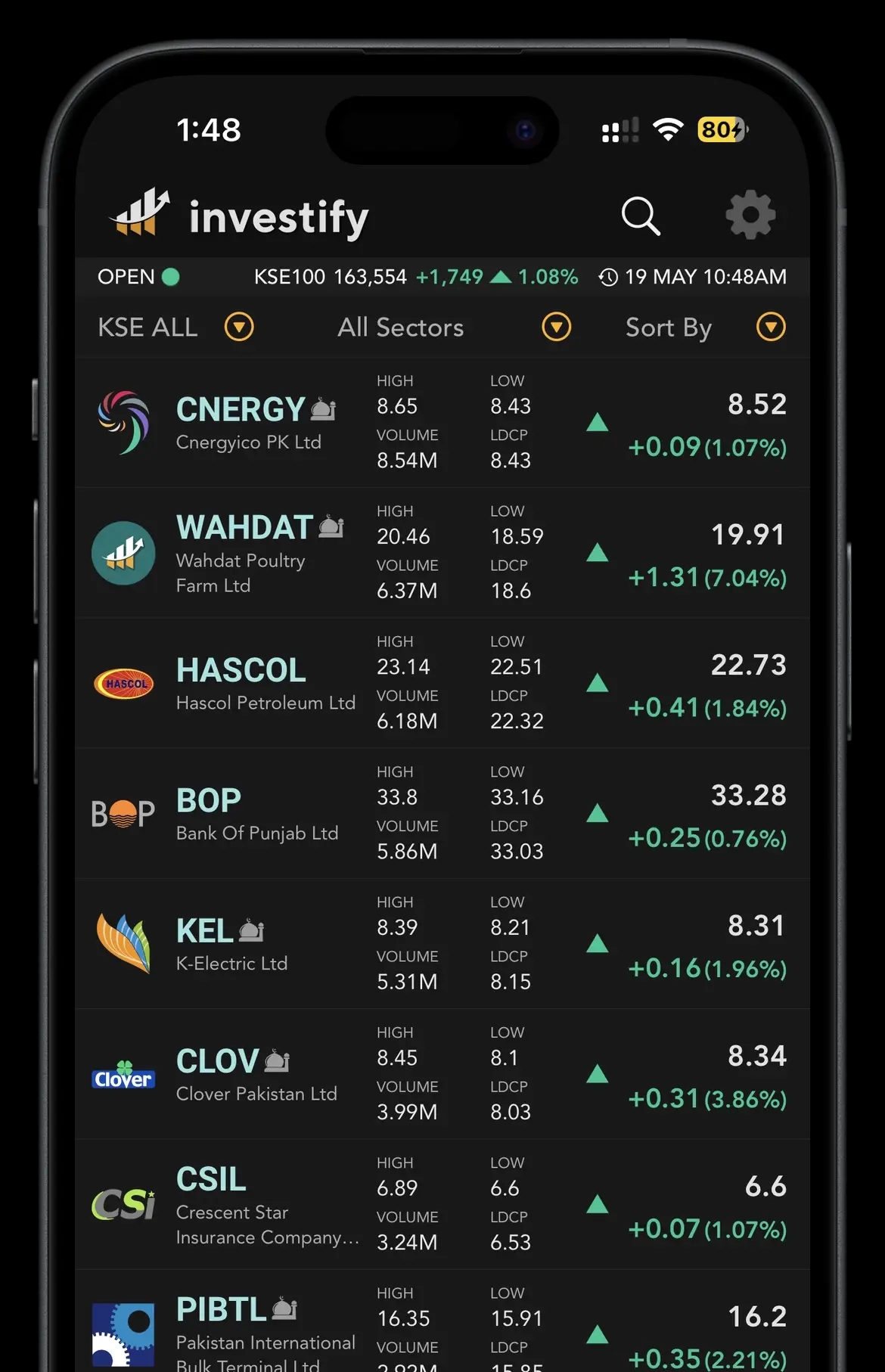
Open market data, stock pages, charts, news, announcements, watchlists and portfolio tracking from one Investify account.
Track dividends in InvestifyA balanced conclusion
Dividend stocks and growth stocks are not rivals as much as two tools for different jobs. Dividends offer regular income and relative steadiness, which may suit conservative and income-focused investors. Growth offers the potential for capital appreciation, which may suit long-horizon and risk-tolerant investors.
In the PSX context, dividends often cluster in banks, fertiliser, energy and utilities, while growth leans towards technology and selected cyclicals. Both are powerfully shaped by Pakistan's interest rates, inflation and market cycles.
The most useful takeaway is not to pick a side, but to understand the trade-offs and match them to your situation. Before investing in either style, review the company's fundamentals, payout sustainability, earnings growth, debt and valuation, and be honest about your own time horizon and risk tolerance. Many investors find that a thoughtful blend of both fits real life better than a purist approach.
Related reading
Sources and references
- Pakistan Stock ExchangeOfficial exchange website for PSX market and listed-company information.
- SECPOfficial regulator website for Pakistan's securities market.
- State Bank of Pakistan monetary policyOfficial source for policy-rate decisions and monetary policy context.
- FBR withholding tax rate cardsOfficial source to verify current withholding tax treatment.