



Common Mistakes Beginners Make in the Pakistan Stock Exchange
Everyone makes mistakes when they start investing. A few early missteps are part of learning, and they do not define your whole investing journey. The real problem is making the same mistakes repeatedly, because that is when they get expensive.
Most beginner mistakes on the Pakistan Stock Exchange (PSX) are familiar and predictable: chasing tips, trading too often, ignoring announcements, skipping costs, and reacting emotionally to daily price moves. This guide walks through the most common ones, why they happen, and the simple habits that help avoid them.
Key takeaways
- Mistakes are normal; repeated mistakes are costly. The goal is not perfection, but better habits.
- The biggest traps are often behavioural, not technical: tips, overtrading, panic-selling and weak research.
- Know why you bought. If you cannot explain your reason, you will not know what to do when the price moves.
- Charges, taxes and risk are easy to ignore but easier to manage once you pay attention to them.
- Use Investify to research, follow announcements, build watchlists and track your portfolio, but remember that it is a data app, not a broker.
1. Starting with tips instead of understanding the company
This is the classic beginner mistake. A relative says "buy this", a WhatsApp group is excited about a stock, or someone online says a share will go up. Money goes in before the investor understands what the company does, how it earns, or why the price is moving.
The trouble is not only that the tip may be wrong. The bigger issue is that you do not know why you own the stock. When it drops, you panic. When it rises, you do not know whether the move is justified. You are depending on the tip-giver instead of your own process.
Better habit: before buying anything, spend a few minutes understanding the company, its sector, recent results and recent announcements. You do not need to be an analyst. You just need a reason you can say out loud.
2. Buying without checking PSX announcements and company filings
Listed companies file announcements through PSX: financial results, dividend declarations, board-meeting notices, material information and other corporate actions. These often explain exactly why a share is moving.
Beginners who skip announcements sometimes buy after news they did not see, or sell without understanding that a corporate action has changed the context.
Better habit: check a company's recent announcements and news before you act. On Investify, stock pages bring price, data, news and announcements into one workflow so you can see if something material just happened.
3. Ignoring charges, taxes and transaction costs
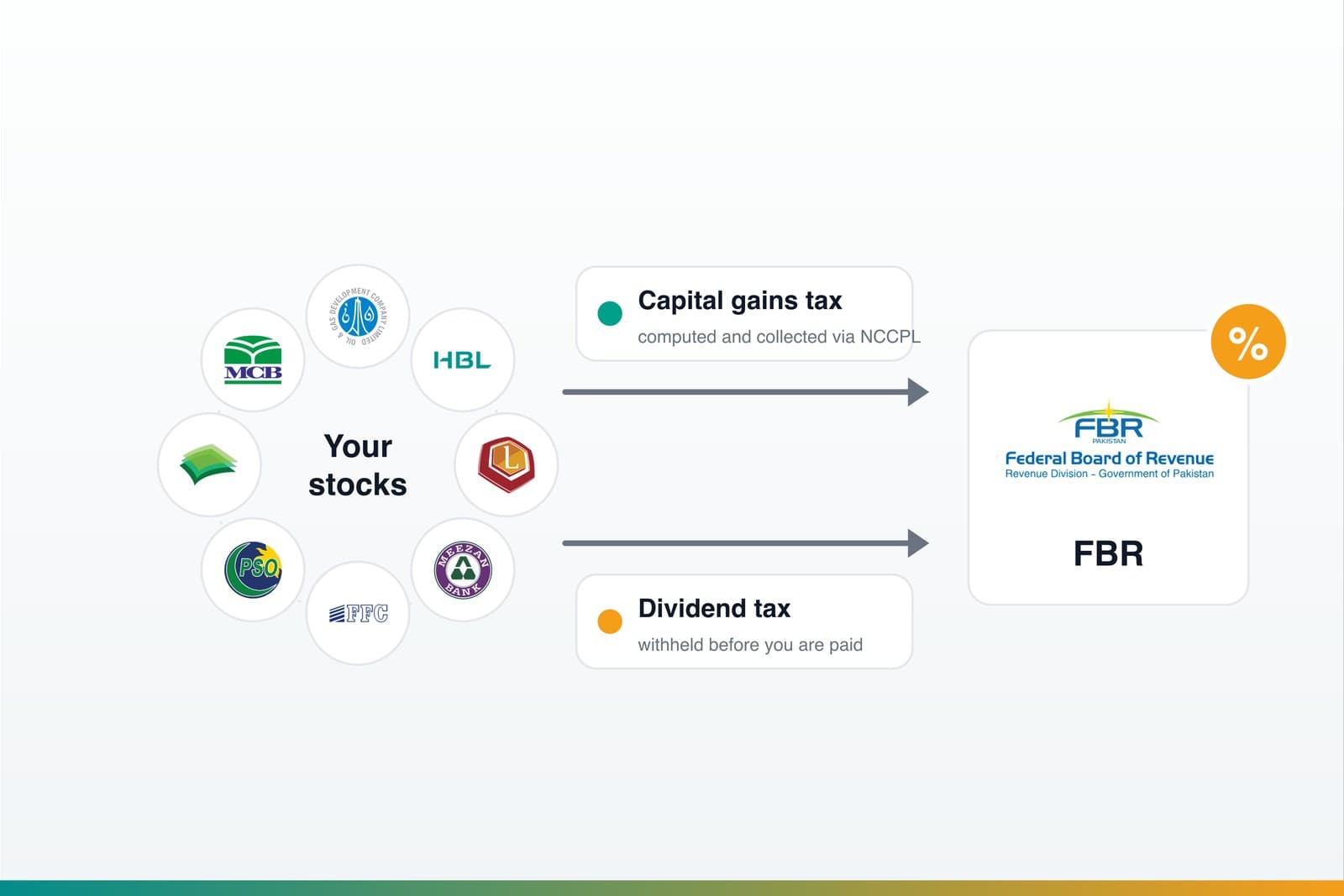
New investors often focus only on the share price and forget the costs around the trade: brokerage commission, regulatory and market charges, applicable sales tax on brokerage, and capital gains tax on profits.
None of these costs is usually dramatic by itself, but together they affect your real return. They matter even more if your starting amount is small or you trade frequently.
4. Putting everything into one stock
Putting your entire amount into a single company is one of the riskiest beginner moves. If that one business stumbles, your whole portfolio stumbles with it. This becomes especially stressful when the stock was bought because of a tip rather than research.
Better habit: spread even a modest amount across a few companies, ideally in different sectors, so one company's bad day does not decide your entire result. Diversification does not remove risk, but it can reduce the damage from one bad decision.
5. Overtrading because prices move every day
Prices move constantly, and a screen full of green and red numbers tempts beginners to do something every day: buy, sell, switch, average down, or chase the next moving share. But every trade carries costs, and frequent trading driven by daily noise often creates more mistakes than insight.
Watching prices is not the problem. Reacting to every small move is.
Better habit: decide your approach when the market is closed and you are calm. Checking your watchlist is fine. Trading only because the screen moved is usually a weak process.
6. Confusing low share price with cheap valuation
"It is only PKR 12 a share, so it is cheap" is a tempting idea, but it is flawed. Price per share is not the same as value. A low-priced share can be expensive if the business is weak or the valuation is stretched. A high-priced share can be reasonable if the company has strong earnings, assets or cash flows.
For example, a higher-priced company like LUCK can still be assessed on fundamentals, while a low-priced share still needs proper research. This is a neutral example, not a suggestion to buy or sell.
Better habit: judge value with company financials, ratios, sector comparison and business quality, not the rupee sticker price alone.
7. Not understanding bid, ask, volume and liquidity
Many beginners read only the last traded price and ignore the bid, ask, volume and spread.
- Bid is the highest price buyers are currently willing to pay.
- Ask is the lowest price sellers are currently willing to accept.
- Volume shows how actively the share is trading.
- Spread is the gap between bid and ask.
On a thinly traded share, a wide spread can quietly cost you. You might buy at the ask and only be able to sell at a much lower bid.
Better habit: before trading, glance at bid, ask and volume so you understand liquidity and the likely cost of entering or exiting.
8. Selling in panic after normal market volatility
Markets go up and down. That is normal behaviour, not a malfunction. Beginners often panic-sell after a sharp fall, locking in a loss without checking whether the company's fundamentals or news actually changed.
Sometimes selling is the right decision. But selling only because the screen is red is not a plan.
Better habit: expect volatility in advance. If your reasons for owning a company have not changed, a falling price alone is not automatically a reason to sell. Review your notes, announcements and risk limits before acting.
9. Using money needed for emergencies or short-term expenses
Investing money you will soon need for rent, fees, family expenses or emergencies creates pressure. If the market is down when you need the cash, you may be forced to sell at a bad time.
10. Not keeping records of why each investment was made
When you do not write down why you bought something, you are at the mercy of memory and mood. Months later, you may not remember your reasoning, so you react to price movement instead of a plan.
Better habit: keep a simple note for each holding: why you bought, the price, the main risk, and what would make you reconsider. It turns vague feelings into a record you can review.
11. Ignoring dividends, bonus shares and corporate actions
Beginners often watch only share price and miss the rest of the return picture: dividends, bonus shares, rights issues, book closures and other corporate actions. These are announced through PSX and can matter over time.
Better habit: follow announcements and track dividends as part of your overall portfolio, not as an afterthought.
12. Not using watchlists and portfolio tracking
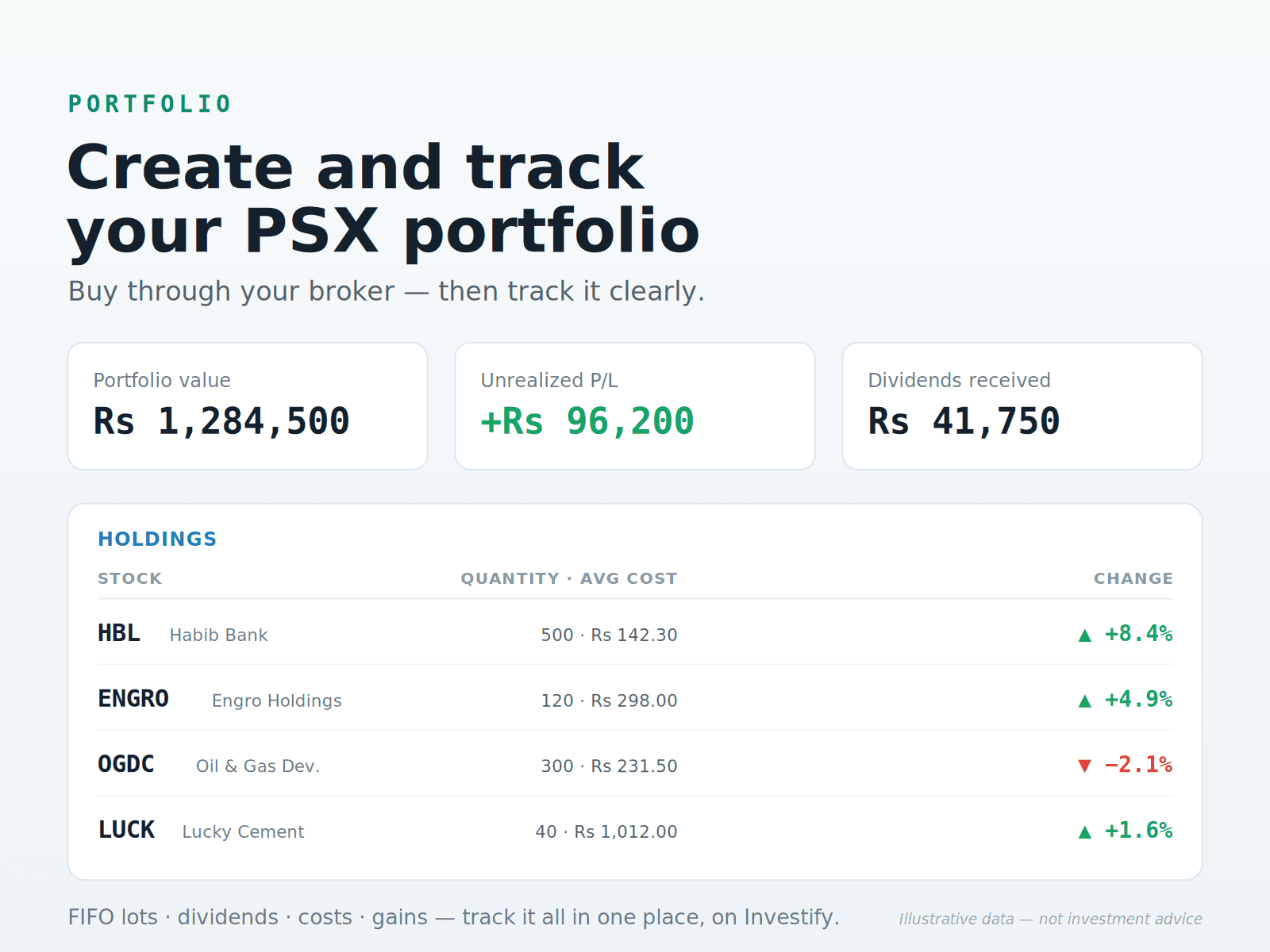
Trying to follow everything from memory, screenshots or scattered notes leads to missed news and repeated research. Without a watchlist, you re-check the same companies again and again. Without portfolio tracking, you may not know how your holdings, dividends and realised history fit together.
Better habit: keep a watchlist of companies you are studying and track actual holdings in one place, so decisions come from a clearer picture rather than guesswork.
A better beginner routine
A calm, repeatable routine prevents many of the mistakes above:
- Research before buying. Understand what the company does and check its recent results.
- Check announcements and news on the stock page before acting.
- Know your costs. Read your broker's tariff schedule and factor in charges.
- Diversify carefully. Avoid putting everything into one stock or one sector.
- Avoid daily reactions. Decide when calm; do not trade on every wobble.
- Keep records. Note why you bought each holding and what would change your mind.
- Protect your cash. Keep emergency and short-term money out of the market.
- Track everything. Use watchlists and portfolio tracking, including dividends and corporate actions.
- Verify the rules. Confirm fees, account limits and tax treatment with official sources or qualified professionals.
Quick reference: mistakes, why they hurt and better habits
| Mistake | Why it hurts | Better habit |
|---|---|---|
| Buying on tips | You do not know why you own it, so you cannot react sensibly | Understand the company first; have a reason you can state |
| Skipping announcements | You miss news that may be moving the price | Check PSX announcements and filings before buying |
| Ignoring charges and taxes | Costs quietly eat your real return | Read the tariff schedule and factor in charges |
| Going all-in on one stock | One company's bad day can damage the whole portfolio | Diversify across a few companies or sectors |
| Overtrading | Frequent trades add costs and emotional mistakes | Decide when calm and act selectively |
| Assuming low price means cheap | Share price is not valuation | Judge value with financials and ratios |
| Ignoring bid, ask and volume | Wide spreads and low liquidity can cost you | Check liquidity before trading |
| Panic-selling | You may lock in losses without reviewing the facts | Expect volatility and review your plan |
| Using needed money | You may be forced to sell at the wrong time | Keep emergency and short-term cash separate |
| Keeping no records | You react to price instead of your own reasoning | Write a simple note for each holding |
| Ignoring corporate actions | You miss dividends, rights, bonus shares or key notices | Track announcements and dividends |
| No watchlist or portfolio tracking | Decisions rest on memory and guesswork | Use watchlists and portfolio tracking |
How Investify fits into avoiding these mistakes
Most of these mistakes share one root cause: acting without a clear picture. Investify is built to give you that picture before you act. It helps you:
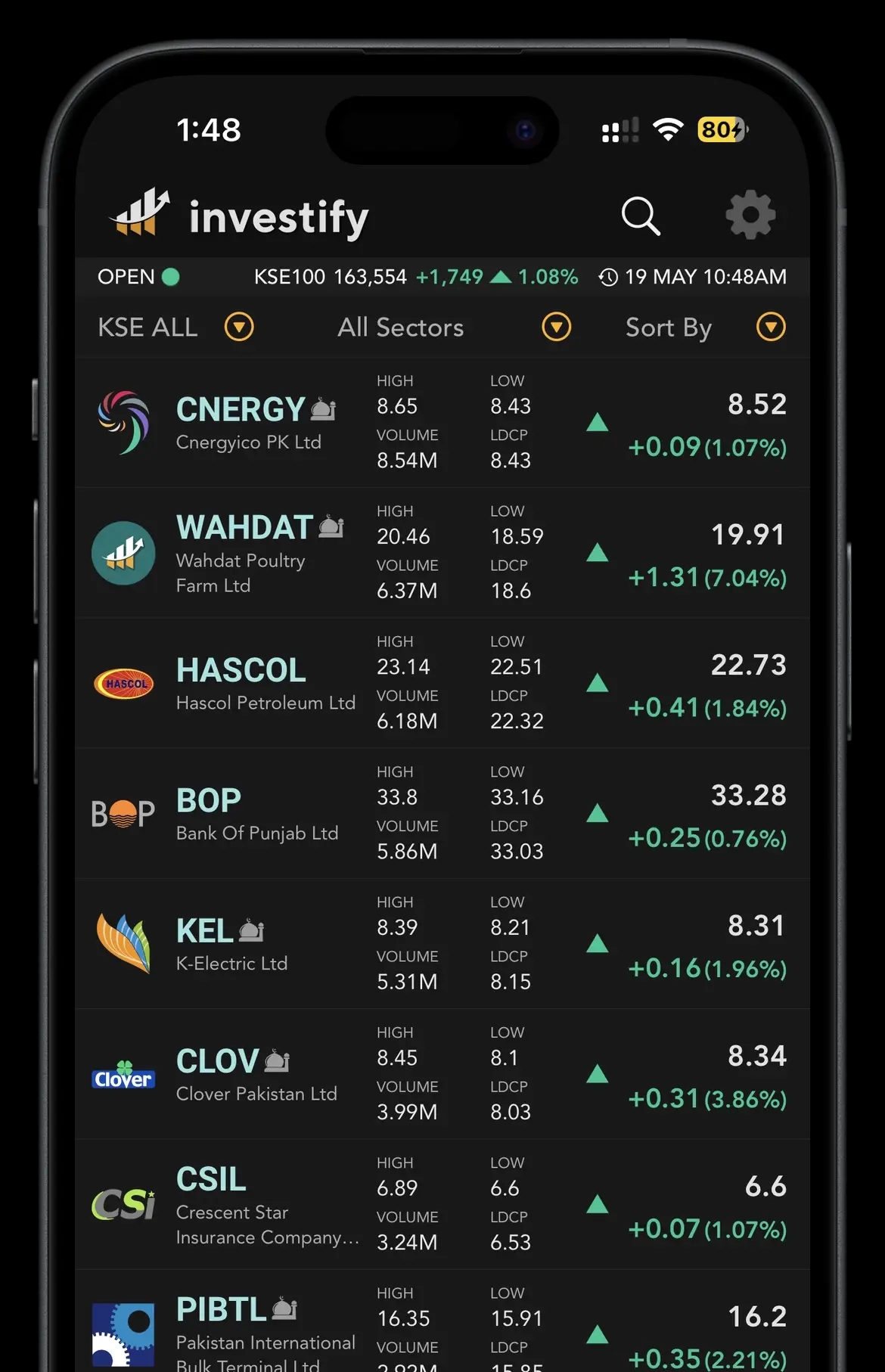
- Follow PSX prices and market movement so you understand context, not just one number.
- Open stock pages to research company data and price history.
- Check announcements and news that explain why prices move.
- Build watchlists of companies you are studying.
- Track your portfolio holdings and dividends in one place.
Investify is a market-data, watchlist and portfolio-tracking app. It is not a broker and does not execute trades. Actual buy and sell orders should go through your licensed securities broker.
Use Investify for your daily PSX workflow
Open market data, stock pages, charts, news, announcements, watchlists and portfolio tracking from one Investify account.
Build a watchlist routineEducational note
This article is for general education only. It describes common beginner mistakes on the Pakistan Stock Exchange and general habits to avoid them. It is not personal investment, financial, legal or tax advice, it does not promise returns, and it does not recommend buying or selling any security. Company symbols mentioned are neutral examples. Fees, limits and tax rules vary by broker and change over time. Verify current details with your broker and official PSX, CDC, NCCPL, SECP and FBR sources, and consult a qualified professional for personal financial or tax matters.
The bottom line
You do not need to be perfect to invest well on PSX. You just need to avoid repeating the costly mistakes. Understand what you buy, check announcements, respect charges and risk, diversify carefully, keep emergency money separate, and do not let daily price swings drive every decision.
Build a simple routine, keep records, and use Investify to research, follow news, maintain watchlists and track your portfolio. Then place actual trades through your licensed broker. Make fewer mistakes over time, and the learning curve becomes much less expensive.
Related reading
Sources and references