



PSX Company Announcements Explained: Results, Dividends, Board Meetings, Book Closure, Rights and Bonus Issues
A PSX company announcement is a formal notice that a listed company makes available to the market about something important - its financial results, a dividend, a board meeting, a bonus or rights issue, or another development that could matter to shareholders. Learning to read these announcements is one of the most useful habits a new investor can build.
If you already understand what a share is but freeze up when you see words like "book closure," "interim dividend," or "entitlement date," this guide is for you. It explains the most common types of PSX company announcements in plain English, shows you how to read one step by step, and walks through how to bring it all together using Investify.
Key takeaways
- A PSX company announcement is a formal company disclosure made available to the market, so investors can work from the same information.
- Announcements can move a share price because they change what investors expect about a company's future.
- The most common types include financial results, dividends, board meeting notices, book closure notices, bonus shares, rights issues, and general meeting notices.
- Learning how to read PSX announcements helps you separate first-hand company information from news commentary and rumours.
- On Investify, you can view Company Announcements in one place and study each one alongside the company's price, chart and fundamentals.
What is a PSX company announcement?
When a company is listed on the Pakistan Stock Exchange, it has a responsibility to keep shareholders and the wider market informed about developments that could reasonably affect the value of its shares. It does this through formal announcements, sometimes called disclosures or notices.
The key idea is fairness. A formal announcement is made available to the market rather than being shared only with a small group of investors. This is why company announcements matter more than a tip from a friend or a message forwarded on social media: they are the first-hand disclosure that other commentary should be checked against.
PSX financial announcements cover a wide range of events, but most fall into a handful of familiar categories that we will go through one by one.
Why company announcements can affect a stock price
A share price reflects what investors collectively expect a company to be worth in the future. An announcement can change those expectations, and when expectations shift, so can the price.
For example, results that are stronger than the market anticipated might lift a share, while weaker-than-expected results might weigh on it. A large dividend announcement might attract income-focused investors. News of a rights issue might raise questions about why the company needs fresh capital. Even the timing matters: a board meeting notice tells the market that important decisions may be close.
Prices react to the difference between the news and what was already expected - not just to the news by itself. A profitable result can still receive a muted or negative price reaction if investors were hoping for even more. This is why context matters, and why it helps to view an announcement alongside the company's recent price behaviour rather than in isolation. Our guide on why the PSX is up or down today explains this relationship between news and price in more detail.
The main types of PSX announcements
Financial results
Companies report their performance at regular intervals during the year - commonly quarterly, at the half-year, and for the full financial year. These results are among the most closely watched PSX financial announcements.
As a beginner, a few things are worth looking for:
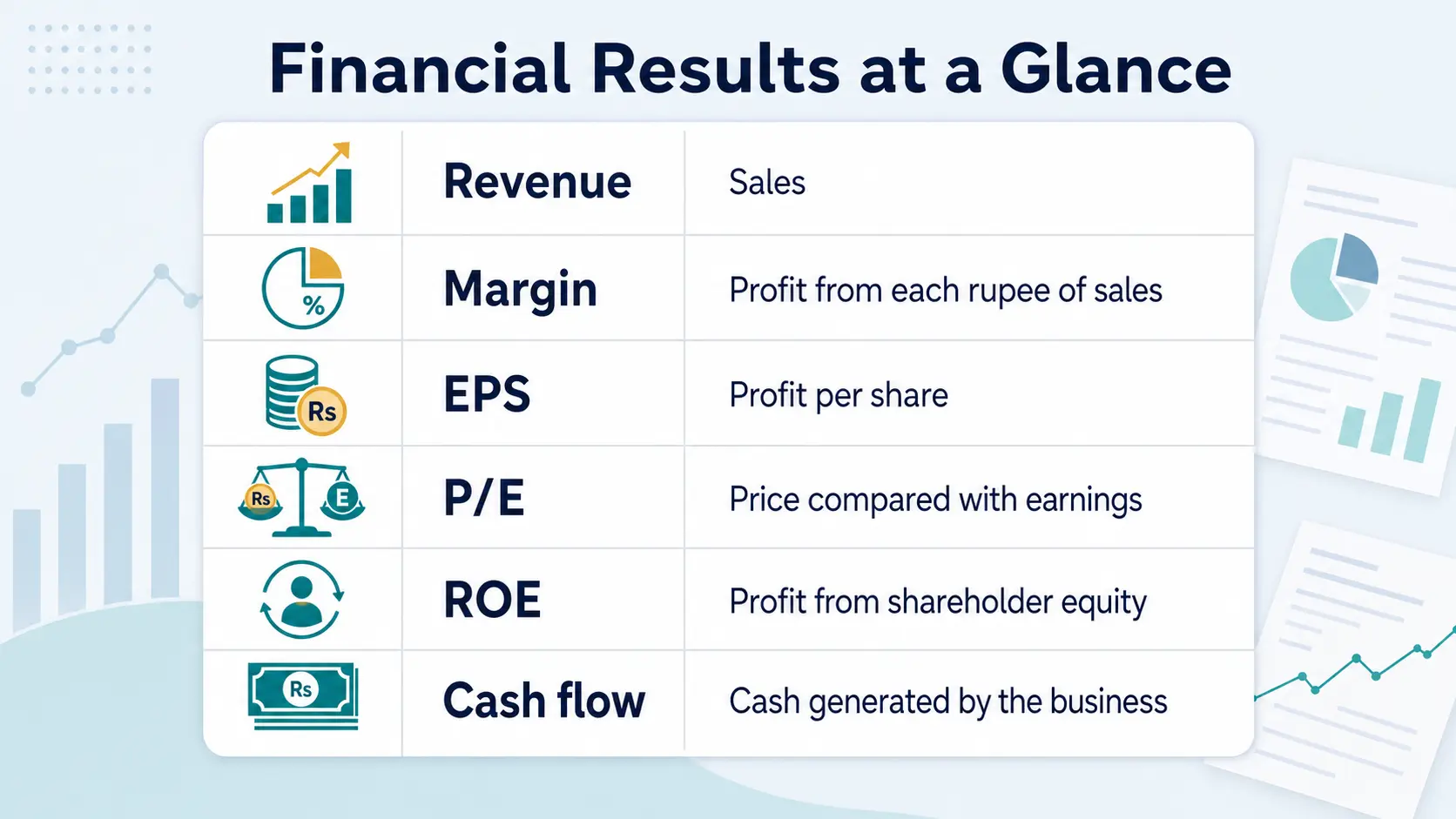
- Profit or loss, and whether it grew or shrank compared with the same period a year earlier.
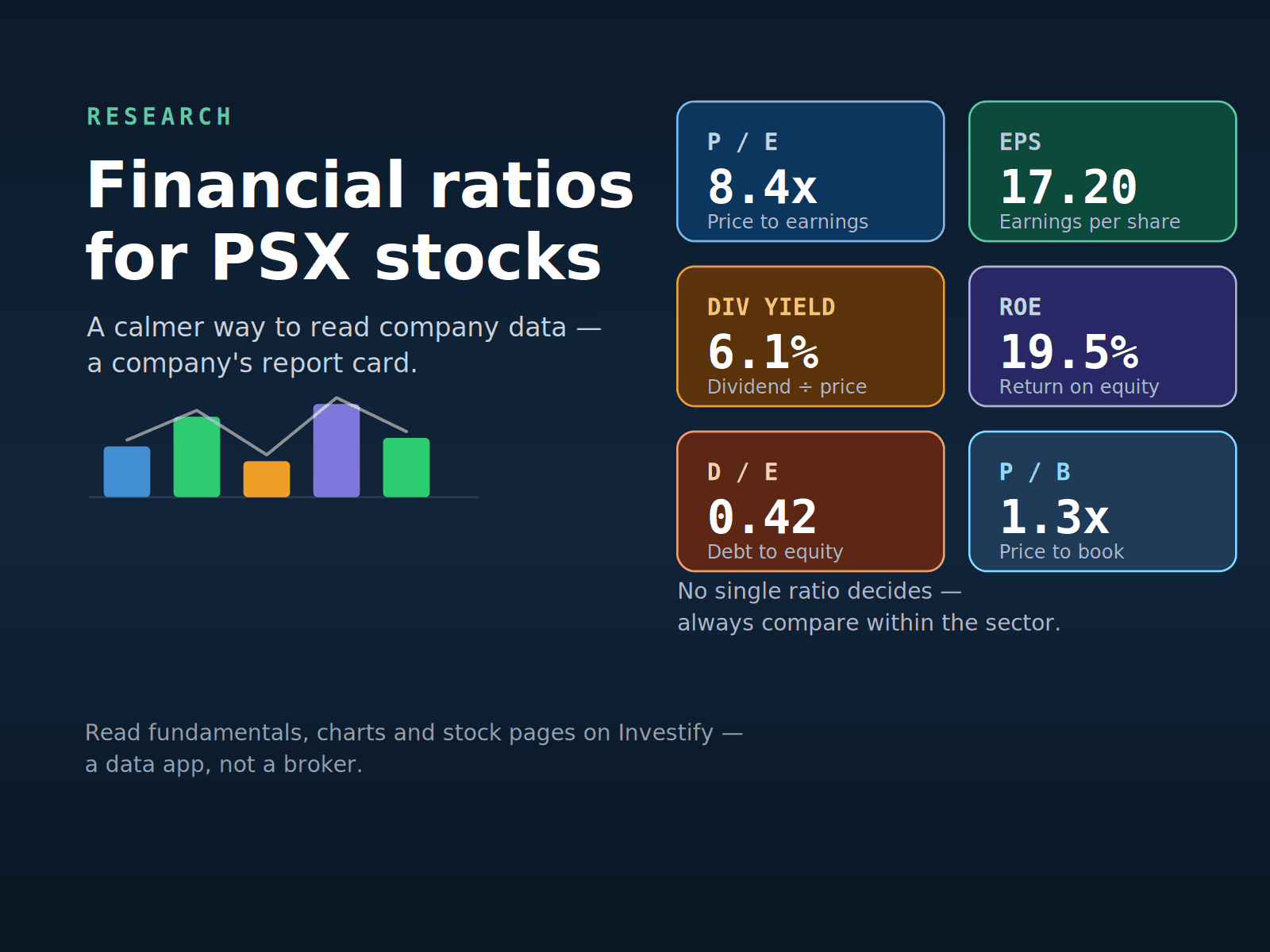
- Earnings per share (EPS), which expresses profit on a per-share basis and makes it easier to compare periods.
- Revenue or sales, which shows whether the underlying business is growing.
- Any dividend declared alongside the results, which companies often announce at the same time.
Rather than fixating on a single number, look at the trend across several periods and how the figures compare with what the market seemed to expect. If you are new to this, our guide on how to research PSX companies before buying walks through reading fundamentals in a beginner-friendly way.
Interim and final dividends
A dividend is a share of a company's profits paid out to shareholders. On the PSX you will commonly see two kinds:
- An interim dividend is declared during the financial year, often together with quarterly or half-year results. A company may declare more than one interim dividend in a year.
- A final dividend is proposed after the full-year results and is often subject to shareholder approval at the annual general meeting.
A dividend announcement typically states the amount per share and refers to dates that help determine who is eligible to receive it. That brings us to terminology that confuses many newcomers.
Book closure, entitlement dates and ex-dividend
When a company declares a dividend, a bonus, or a rights issue, it needs a way to determine which shareholders are eligible. That is the purpose of book closure: the company announces a period and uses the relevant shareholder records to identify entitlement.
You may also see an entitlement date or record date. These labels describe the point used to determine eligibility, but the exact outcome depends on the published dates, the settlement timetable and the way the holding is recorded through your broker.
The phrase ex-dividend means that a share is trading without the upcoming dividend entitlement. A similar ex-date concept can apply to other corporate actions. Do not rely on a simple before-or-after rule when deciding eligibility. Read the complete announcement, check the book-closure and entitlement details, and confirm any uncertainty with your broker.
Around an ex-date, a share price can adjust downward by an amount related to the dividend or other entitlement. This is a possible mechanical adjustment because the share no longer carries the same entitlement; it is not automatically evidence that the underlying business has worsened.
Board meeting announcements
Before a company's board makes major decisions, it usually issues a board meeting announcement. This notice tells the market that directors will meet on a specific date to consider particular matters - commonly financial results, and sometimes a possible dividend, bonus or other proposal.
A board meeting announcement is a heads-up. It does not tell you what the board will decide; it tells you when to expect further information. Investors watch these notices because results or other significant decisions may follow.
Bonus shares
PSX bonus shares are additional shares distributed to existing shareholders in proportion to what they already hold, usually expressed as a ratio. For example, an announcement might specify a certain number of bonus shares for every set number already held.
Bonus shares are often issued from the company's reserves rather than by bringing in new money. Because the total value of the company has not automatically increased while the number of shares has, the per-share price can adjust downward proportionally. In simple terms, you may end up holding more shares at a lower price per share, with the overall value of your holding broadly unchanged at the moment of issue.
Rights issues
A PSX rights issue is a way for a company to raise fresh capital from existing shareholders. It offers current shareholders the right to buy new shares, usually at a specified price and in proportion to their existing holding.
The important difference from bonus shares is that a rights issue generally requires you to pay for the new shares. As a shareholder, you typically face a choice: subscribe and buy the additional shares, or decline. If you let the rights lapse without subscribing, your proportional stake in the company may shrink.
Because a rights issue involves a decision and potentially spending more money, read the announcement carefully - including the ratio, price, purpose and relevant dates.
AGM and EOGM notices
Listed companies also announce shareholder meetings:
- An AGM (Annual General Meeting) is held once a year, where shareholders consider the annual accounts, may consider the final dividend, and vote on matters such as electing directors and appointing auditors.
- An EOGM (Extraordinary General Meeting), sometimes called an EGM, is called for special business that cannot wait for the AGM - for example, approving a major transaction or a change to the company's capital.
These notices tell shareholders when and how they can participate and what will be discussed.
Material information and other disclosures
Beyond the scheduled items above, companies may disclose material information - a development significant enough to potentially affect the share price. Examples include major contracts, expansion plans, changes in senior leadership, significant legal matters, or credit-rating updates.
These price-sensitive disclosures help ensure that important news is made available through a formal channel rather than being left to selective leaks or rumours.
How to read a PSX announcement, step by step
Once you know the categories, reading an individual announcement becomes much simpler. Here is a straightforward approach:
- Identify the company and the type. Is this a results announcement, a dividend, a board meeting notice, a bonus, a rights issue, or something else?
- Note the date and timing. Is this a notice of a future event, such as a board meeting, or a decision that has already been made?
- Read the core decision. What exactly is being announced - the profit figure, dividend per share, bonus ratio, rights terms or meeting agenda?
- Check the key dates. Look for the board meeting date, book-closure period, entitlement information and any deadline relevant to the action.
- Add context. Compare it with the company's recent results, fundamentals and what the market seemed to expect.
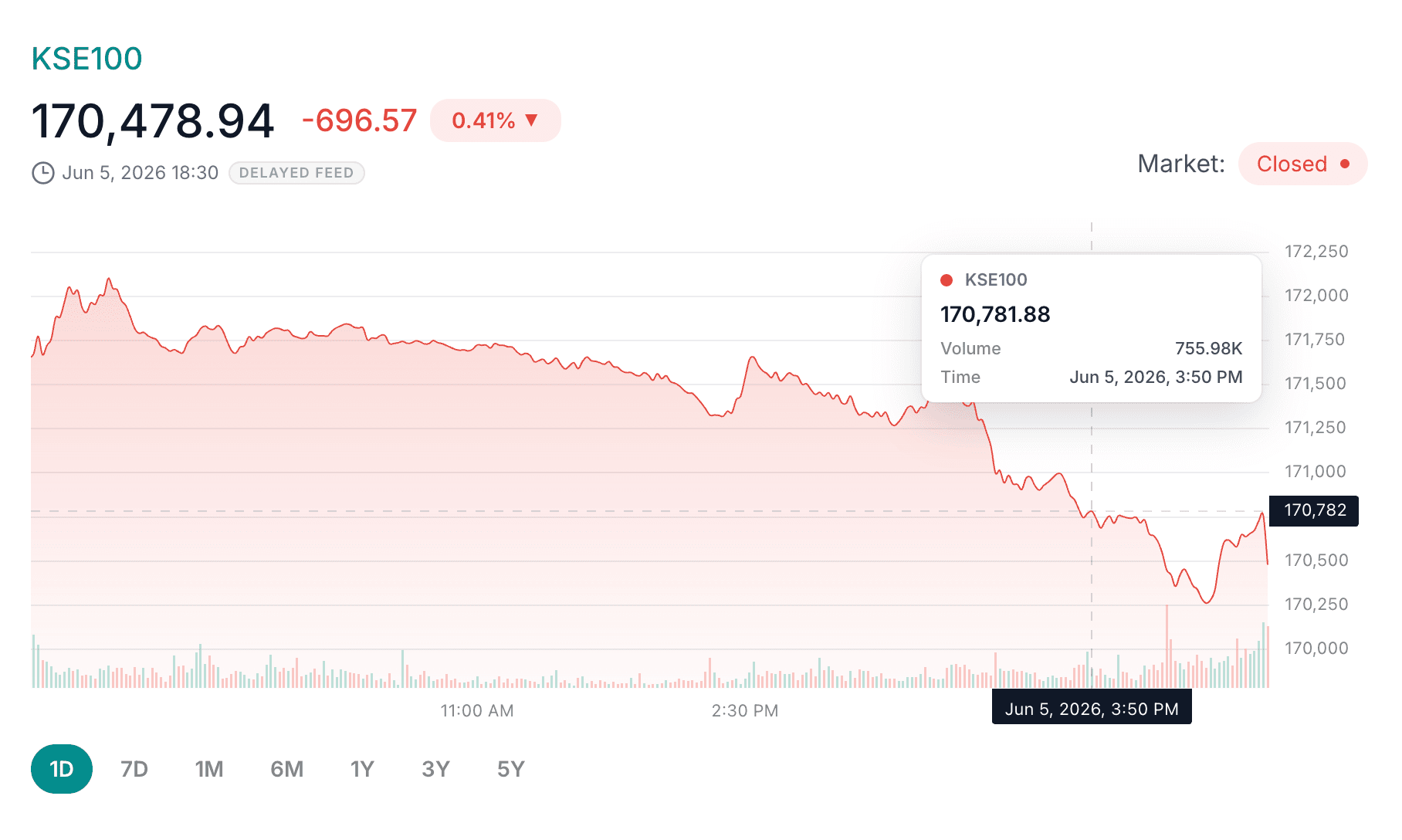
- See how the price reacted. Looking at the chart around the announcement tells you how other investors interpreted it, although the reaction is not a forecast.
If any of the numbers on a quote screen feel unfamiliar, our guide on how to read a PSX stock quote is a helpful companion.
Announcements vs business news vs rumours
Not all information is equal, and knowing the difference can protect you from avoidable mistakes:
- Company announcements are first-hand disclosures made available to the market. Read the complete notice, including its date, conditions and attachments.
- Business news and commentary interpret and summarise announcements. They can be useful for context, but they may be incomplete or arrive after the filing.
- Rumours and social-media chatter are unverified. They can move prices in the short term, but acting on them without checking a formal company disclosure is risky.
A good habit is simple: when you hear something about a company, open its announcement history in Investify before forming a view. If you cannot find a formal disclosure, treat the claim with caution.
A practical workflow with Investify
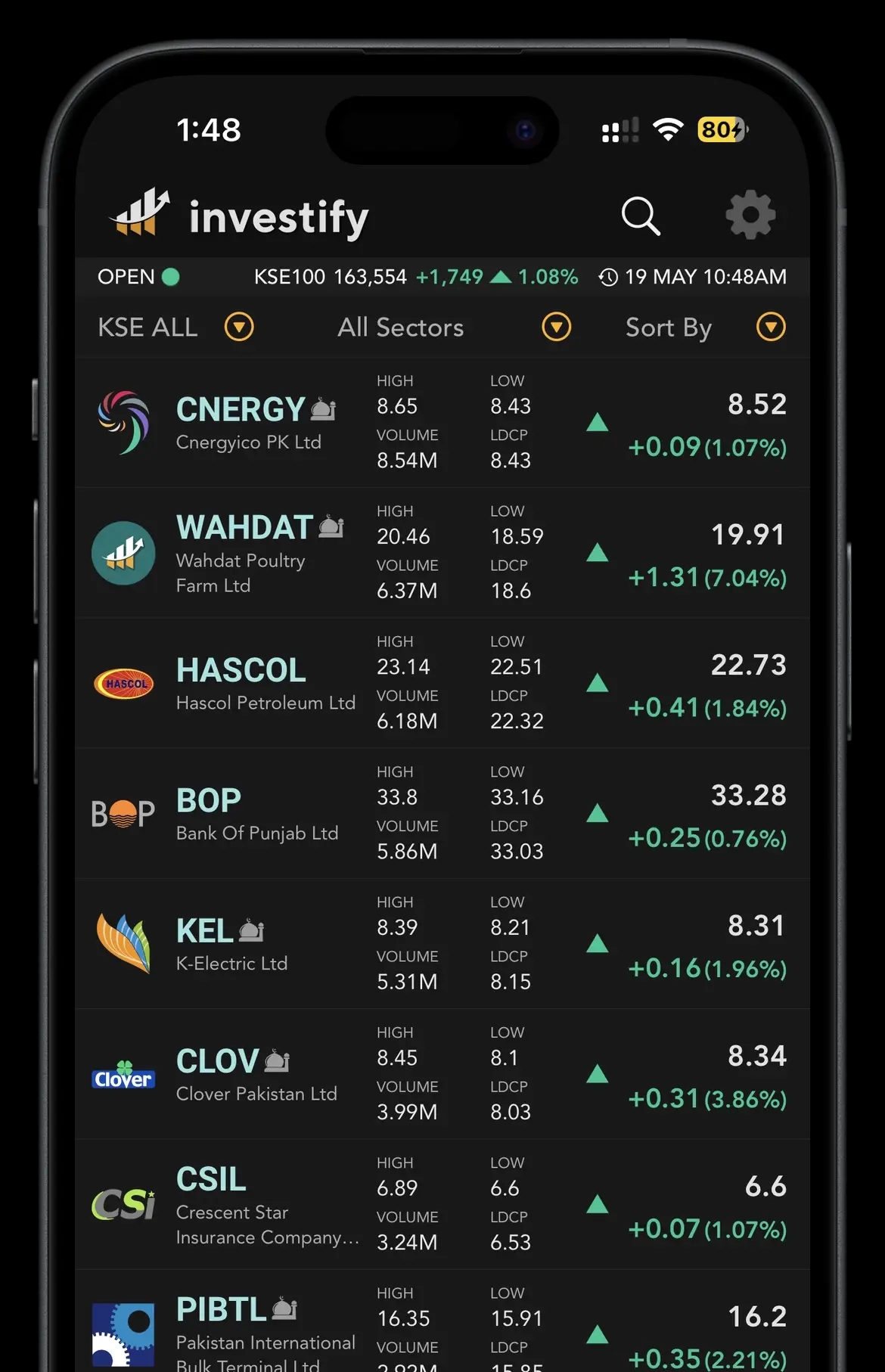
Investify is built to make this process easier by keeping announcements and surrounding market context in one place. It is a market-data, research and portfolio-tracking app - not a broker - so it is designed for understanding and monitoring, while actual buy or sell orders are placed through your own licensed broker.
A simple workflow looks like this:
- Start on the Company Announcements page. Review recent company filings and notices from across the market, then narrow your attention to a company or announcement type where available.
- Open the relevant stock page. Each stock page has an Announcements section alongside the company's quote, chart, fundamentals and other research information. For example, you can open HBL's Announcements section.
- Connect the dots. Read the announcement next to the price and chart to see how the market reacted, then check fundamentals and related market news to build a fuller picture.
Because everything lives together, you can move from "what was announced" to "how does this fit the company's numbers and price" without hopping between disconnected screens.
Keep company announcements in your daily PSX workflow
Review recent filings, then open a stock page to compare its announcements with price, charts and fundamentals.
Read Company AnnouncementsA worked example
Imagine a fictional company, Ravi Textiles Limited, publishes a board meeting announcement stating that its directors will meet later in the week to consider half-year results and a possible interim dividend.
A curious investor might use Investify like this. First, they note the board meeting date so they know when to expect the decision. When the results appear, they read the core figures - profit versus the same period last year, EPS, and the size of any interim dividend declared. They then look at the company's fundamentals to see whether the result fits the longer-term trend, and glance at the chart to see how the price responded. If a dividend is declared, they read the book-closure and entitlement details and ask their broker about any uncertainty.
Notice what this investor is not doing: they are not treating the announcement as an automatic signal to buy or sell. They are using it to understand the company better and to ask sensible follow-up questions. That is the mindset an announcement should encourage - informed curiosity, not a reflex reaction.
Monitoring announcements for your holdings and watchlist
Announcements are most useful when they reach you for the companies you actually care about. If you track your holdings and keep a watchlist on Investify, you can keep an eye on the companies you own or are considering rather than scanning the entire market.
This is especially valuable around results season and whenever board meeting notices appear, since those are moments when dividends, bonuses and rights issues may be decided. For a shareholder, spotting a rights issue notice early can be the difference between making a considered decision and missing an important deadline. Reviewing announcements regularly for your own list turns a scattered stream of news into a manageable routine.
A quick disclaimer
This article is for educational purposes only. It explains general concepts and terminology and is not investment, financial, legal or tax advice, and it does not recommend any particular stock. Rules, definitions and processes can change over time, so treat this as a starting point for your own learning. Investify is a market-data, research and portfolio-tracking app, not a broker; any actual buy or sell orders are placed through your own licensed broker. Always do your own research and consider seeking advice from a qualified professional before making investment decisions.
The bottom line
PSX company announcements turn a price move into a question you can investigate. Read the announcement type, core decision, dates and conditions; then compare the filing with the company's fundamentals, chart and recent news. Investify's Company Announcements page and stock-specific Announcements sections keep those pieces close together, so you can build a calmer research routine without treating any single disclosure as a trading command.
Related reading