
Dividend Income Calculator
YOUR SHARES
What your shares pay you
Loading live data for FFC. Example figures show until it arrives.
YOUR DIVIDEND SALARY
Rs 2,125a month
after tax, from 1,000 FFC. Rs 25,500 a year.
About Rs 6,375 each time if split evenly. Dates follow the company's announcements.
Yield on today's value: 5.67% after tax.
THE ATL ON YOUR DIVIDENDS
Being on the list keeps Rs 4,500 more a year
Payer: Listed company (most PSX stocks). Dividend tax is 15% for people on the Active Taxpayers List and 30% for everyone else, and it is final.
GROW IT TO A MONTHLY INCOME
What it takes in FFC
Tap one to work it out. Assumes last year's dividend repeats; companies can pay more, less or nothing.
You only receive a dividend if you own the shares before the ex-date, and it is paid to the bank account linked to your CDC account. Tax is deducted by the company and is final. Figures assume last year's dividend repeats. See FFC's announcements and payout history on its company page. Next: check the yield and cover, or see what reinvesting the dividends builds over the years.
How the dividend calculator works
Dividend income is your shares multiplied by the dividend per share. Before paying you, the company deducts withholding tax, so what reaches your bank account is the net amount. The calculator reads the stock's latest annual dividend per share from live data, multiplies it by your shares, and subtracts the tax for your filer status and the type of company paying. Every prefilled number can be edited, and it tells you which period it came from.
- Shares
- the number of shares you hold before the ex-date
- DPS
- annual dividend per share in rupees (all payouts of the year added)
- Tax rate
- withholding rate for your filer status and the payer type
PSX notices often quote a dividend as a percentage of face value: "Rs 5 per share (50%)". Most companies have a Rs 10 face value, so 50% means Rs 5 and 100% means Rs 10. A few have a Rs 5 or Rs 1 face value, where the same percentage is a smaller amount. Choose % of face value, set the face value, and the calculator converts it to rupees per share.
A worked example
Take 1,000 shares of a company paying Rs 12 a share in a year. The gross dividend is Rs 12,000. What you keep depends on who you are and who pays:
| Case | Tax rate | Tax withheld | You receive | Per month |
|---|---|---|---|---|
| Ordinary company, filer | 15% | Rs 1,800 | Rs 10,200 | Rs 850 |
| Ordinary company, non-filer | 30% | Rs 3,600 | Rs 8,400 | Rs 700 |
| Power producer qualifying for the lower rate, filer | 7.5% | Rs 900 | Rs 11,100 | Rs 925 |
Working backwards: to receive Rs 100,000 a month after tax from a stock paying Rs 20 a share, a filer keeps Rs 17 of each dividend and needs about 70,589 shares. At Rs 200 a share that is roughly Rs 14,117,800, a net yield of 8.5% on the money invested.
Who gets paid: ex-date, book closure and payment
- Ex-dividend date (XD). You receive the dividend only if you own the shares before the stock goes ex-dividend. Buy on or after the XD date and the dividend stays with the seller. PSX ready-market trades have settled one business day after the trade (T+1) since February 9, 2026, which is why the XD date, not the book closure date, is the one to watch. The dates are in each company's notice on the PSX website.
- Book closure. The company closes its share register for a few days to fix the list of shareholders. Your ownership at that cut-off decides your entitlement.
- Payment. Listed companies pay electronically into the bank account (IBAN) linked to your CDC investor account, after deducting tax. Keep your IBAN and details updated through your broker, because a payment with missing details can be held back.
- The price adjusts. Around the ex-date the share price usually falls by about the dividend, since the buyer no longer gets it. A dividend is a way of paying out your own money, not free extra return, which is why the yield and the growth of the business both matter.
Dividend tax in Pakistan, tax year 2027
Tax under section 150 is deducted by the company when it pays the dividend, and it is the final tax on that income. The rate depends on your filer status (on the FBR Active Taxpayers List or not) and on who pays the dividend.
| Paid by | Filer | Non-filer |
|---|---|---|
| Listed company (most PSX stocks) | 15% | 30% |
| Independent power producer (pass-through) | 7.5% | 15% |
| REIT scheme | 15% | 30% |
| Mutual fund, equity income share | 15% | 30% |
| Mutual fund, debt income share | 25% | 50% |
| Mutual fund earning 50% or more from profit on debt | 25% | 50% |
| Company paying no tax (exempt, losses or credits) | 25% | 50% |
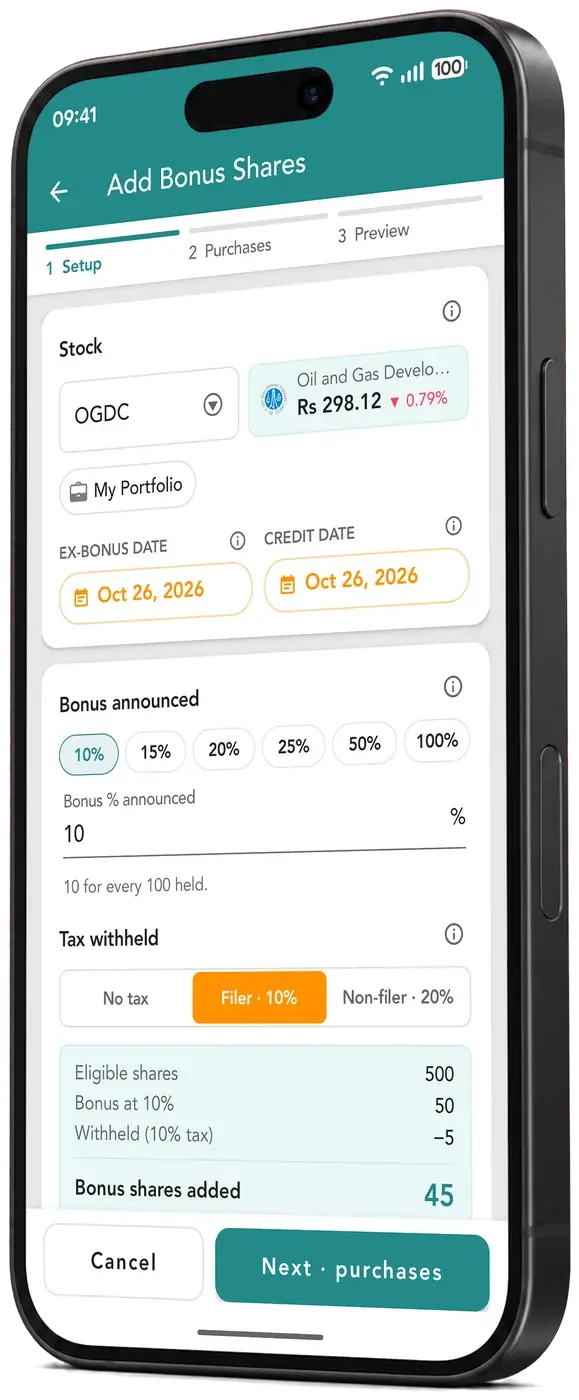
Bonus shares are taxed separately, see the bonus shares calculator. For the tax side alone, including how it differs by payer, use the dividend tax calculator. If you invest by Shariah screens, the dividend purification calculator works out the part of a dividend to give away.
Common mistakes
- Reading a percentage as rupees. A 50% dividend on a Rs 10 share is Rs 5, not Rs 50.
- Counting a one-off as a habit. A special or final dividend in one year may not repeat. Check the payout history on the company page before assuming the same income next year.
- Forgetting the tax. A headline dividend yield is before tax. The after-tax figure is what you keep, see the dividend yield calculator.
- Buying only for the dividend. The price adjusts when the stock goes ex-dividend. Reinvesting what you receive is what compounds the income, see the DRIP calculator.
Sources and assumptions
Withholding rates checked October 31, 2026 against the FBR rate card for tax year 2027.
- FBR Withholding Tax Rates Card, tax year 2027
- KPMG Taseer Hadi & Co., A Brief of Finance Act 2026
- Pakistan Stock Exchange, company announcements and book closure notices
- Pakistan Stock Exchange, implementation of the T+1 settlement cycle (February 9, 2026)
- Central Depository Company of Pakistan (CDC), investor accounts and IBAN details
- Dividend per share: latest reported figures on Investify; the period is shown next to every prefilled number
Results are estimates for information and planning only, not tax, legal or investment advice. Check your own case with a tax adviser, your broker or the official source before acting.
FAQ
Dividend Income Calculator: common questions
How do I calculate dividend income from PSX shares?+
Multiply your shares by the dividend per share, then subtract withholding tax. For example, 1,000 shares paying Rs 12 a year give Rs 12,000 gross. A filer pays 15% tax (Rs 1,800), so Rs 10,200 reaches the bank account, or Rs 850 a month. The calculator does this with live dividend data for the stock you pick.
What does a 50% cash dividend mean in rupees?+
PSX notices state many dividends as a percentage of face value. Most companies have a Rs 10 face value, so a 50% dividend is Rs 5 per share and a 100% dividend is Rs 10. A few companies have a Rs 5 or Rs 1 face value, where the same percentage is a smaller amount. Use the "% of face value" option and set the face value.
How much tax is deducted on dividends in Pakistan?+
For tax year 2027, most listed companies deduct 15% from filers and 30% from non-filers. Dividends from independent power producers whose dividend qualifies under the power purchase agreement rule are taxed at 7.5% for filers and 15% for non-filers; the company's dividend notice says whether it applies, so check it before assuming the lower rate. Mutual funds and companies that pay no tax themselves are taxed at higher rates.
Is dividend tax final, or do I pay more at the end of the year?+
Tax deducted by the company under section 150 is the final tax on that dividend, so you owe nothing further on it. If you file a return, show the dividend under income taxed at source. The tax rate depends on your filer status on the date the dividend is paid, so staying on the Active Taxpayers List matters.
Which date decides who gets the dividend?+
The ex-dividend date (XD). Buy before it and the dividend is yours, buy on or after it and the seller keeps it. The company also announces a book closure, the days when its share register is closed to fix the list of shareholders. Each company's ex-date and book closure are in its notice on the PSX website.
How and when is the dividend paid?+
Listed companies pay dividends electronically into the bank account (IBAN) linked to your CDC investor account, after deducting tax. The payment date is in the company's notice. Keep your IBAN and contact details updated with your broker or CDC, because a dividend with missing details can be held back until you fix them.
How many shares do I need for Rs 100,000 a month in dividends?+
It depends on the dividend per share and your tax status. At Rs 20 a share and 15% tax, you keep Rs 17 a share, so you need about 70,589 shares. At Rs 200 a share that is roughly Rs 14,117,800 invested. Use "Reach a monthly target" to run it for any stock.
Keep going
Related tools
Dividend Yield Calculator
Dividend yield and yield on cost for any PSX stock, from the latest annual payout.
Dividend Tax Calculator
Withholding tax on dividends from shares, IPPs, REITs and mutual funds for filers and non-filers.
Dividend Reinvestment (DRIP) Calculator
How reinvesting dividends and growing payouts compound a PSX holding over time.
Dividend Purification Calculator
The charity amount that purifies dividends and gains from Shariah-compliant stocks.
PSX guides
Learn the ideas behind the numbers
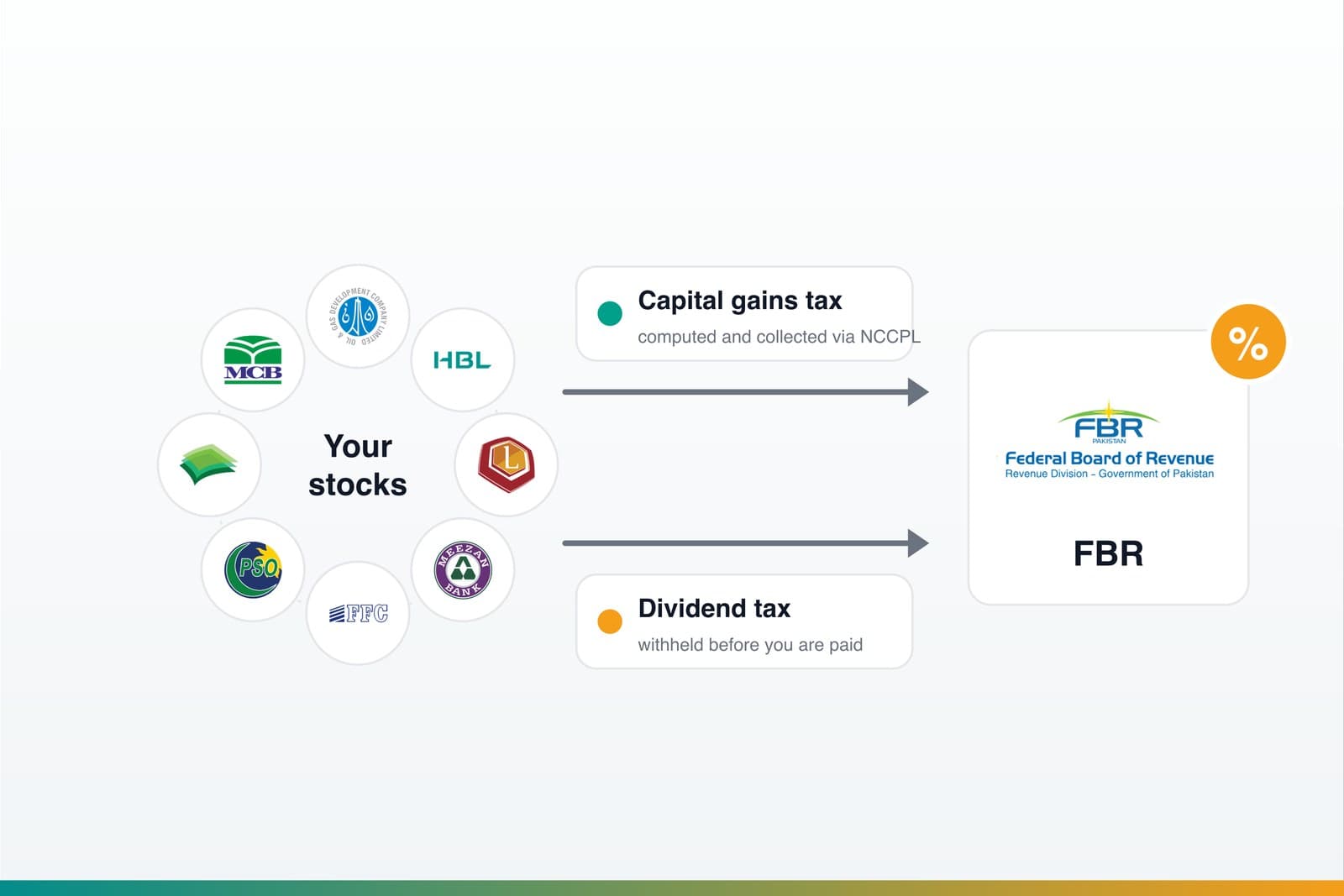
Capital Gains Tax & Dividend Tax on PSX Stocks (Pakistan)
A plain-English guide to how capital gains tax (CGT) and dividend tax work on Pakistan Stock Exchange shares - filer vs non-filer rates, how holding period and acquisition date matter, how NCCPL collects CGT, and what you still have to declare.
Read guide
PSX Company Announcements Explained: Results, Dividends, Board Meetings, Book Closure, Rights and Bonus Issues
Learn what PSX company announcements mean - results, dividends, book closure, bonus shares and rights issues - and how to read them in Investify.
Read guide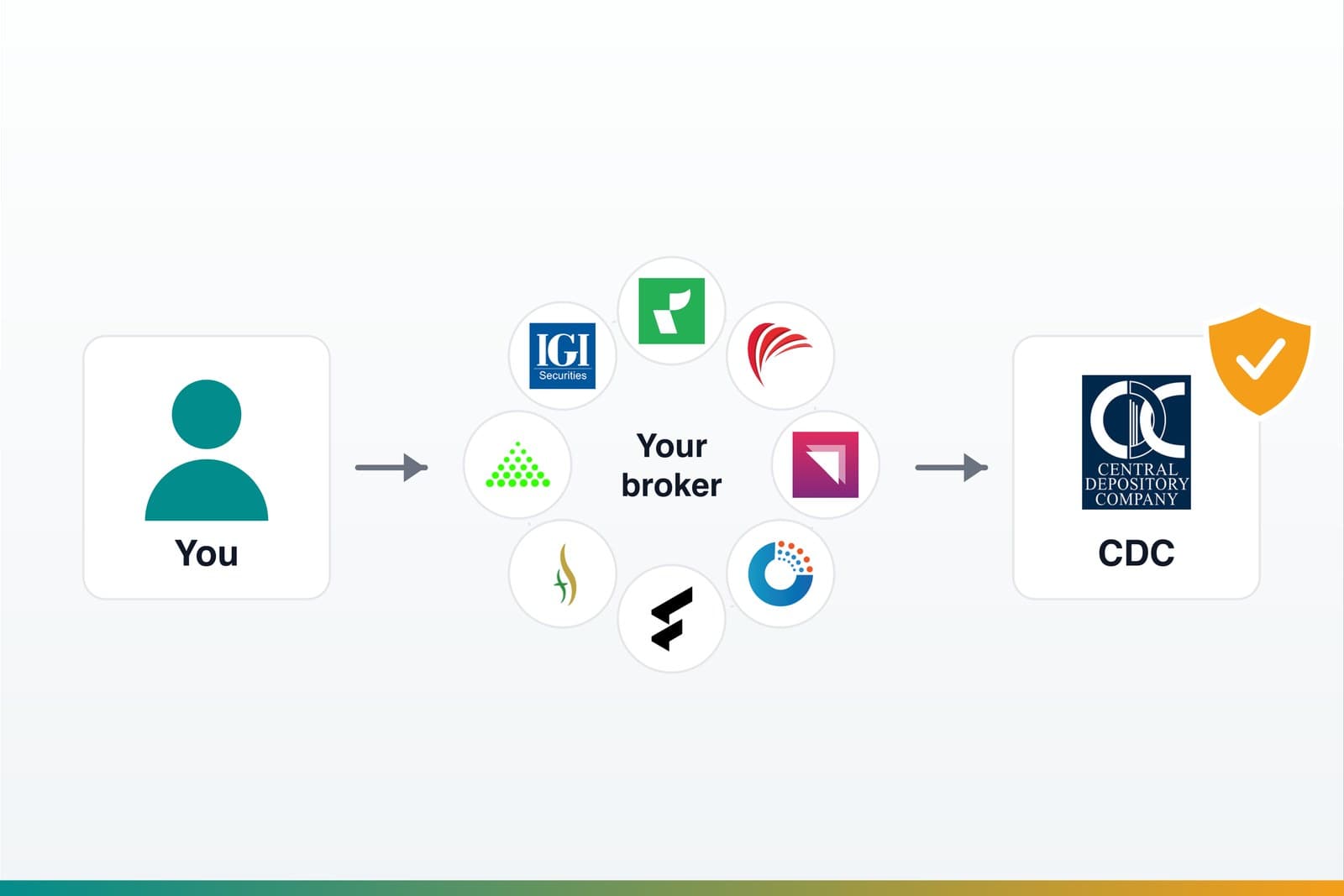
CDC Account Explained: Sub-Account vs Investor Account in Pakistan
What a CDC account actually is, the difference between a broker sub-account and a direct CDC Investor Account (IAS), how to check your shares yourself, and what happens to your shares if your broker shuts down.
Read guide