

An initial public offering (IPO) is the one time you can buy a company's shares from the company itself, before they start trading on the Pakistan Stock Exchange (PSX). It is also the one corner of the market where the rules are different from an ordinary buy order: you do not click "buy" at the live price. You apply during a fixed window, your money is blocked, an allotment decision is made, and only then does the stock list.
This guide explains the process as it works in 2026: book building and the public offer, applying through PSX's e-IPO system (PES) or CDC's Centralized e-IPO System (CES), the minimum application, balloting when an offer is oversubscribed, and refund timelines. Real 2026 offers appear as illustrations only. Nothing here is a recommendation to apply for any IPO.
Key takeaways
- Modern PSX IPOs have two doors. Large investors bid in a book building portion; ordinary investors apply in the general public (retail) portion at the price the book building discovers (the strike price).
- Retail applications are electronic. Recent prospectuses say retail investors can participate only through the e-IPO platforms of PSX (PES) and CDC (CES).
- 500 shares is a common minimum unit. Applications are for 500 shares or multiples of 500, so the minimum rupee amount is the offer price times 500.
- If retail is oversubscribed, a ballot decides. Under the structure in the APAG draft prospectus, small applications are served first, so applying for a much larger amount does not improve your odds.
- Refunds are due within five working days of the close of public subscription, to the same account the money came from. Delays are possible, and a withdrawn IPO can slow things further.
Two ways an IPO sells shares: book building and the public offer
Under the Public Offering Regulations, 2017 as described in recent PSX prospectuses, an IPO can be priced by book building. Think of it as a price-discovery auction that runs before the public subscription.
Step 1: the floor price and the band. The company and its consultant to the issue (the lead manager) set a floor price and a maximum price band. In the Agro Processors & Atmospheric Gases Limited (APAG) draft prospectus, the floor was Rs 32 per share with a maximum band of up to 40% (Rs 44.80). For Khaadi Pakistan Limited's draft prospectus placed on the PSX website in October 2026, the floor is Rs 12.40 with an upper limit of Rs 18.00.
Step 2: bidding. Eligible investors, whose bid must be at least Rs 2 million per the APAG prospectus, bid for shares through "Eligible Participants" (securities brokers, mutual funds, scheduled banks and development finance institutions that are NCCPL clearing members). The strike price is found by a Dutch auction: the price at which the book building portion is fully subscribed.
Step 3: the supplement. Within one working day of the bidding period closing, a supplement to the prospectus is published with the strike price, the offer price and a category-wise breakup of successful bidders.
Step 4: the public (retail) offer. The remaining slice of the issue is offered to the general public at the strike price, although the regulations allow an issuer to offer retail investors a discount to it. This is the part you can apply for. The retail portion must be underwritten, which means named underwriters take up any shares the public does not.
How the issue is split varies by offer. These are the examples from recent prospectuses:
| Offer (illustrative) | Issue | Book building share | Retail share | Notes |
|---|---|---|---|---|
| APAG (listed Sept 2026) | 58,049,541 shares (15% of post-IPO capital) | 75% | 25% | Floor Rs 32, cap Rs 44.80, retail portion underwritten |
| Khaadi Pakistan (draft prospectus, Oct 2026) | 250 million IPO shares, plus a separate 250 million pre-IPO placement | 70% | 30% (75 million shares) | Floor Rs 12.40, cap Rs 18.00; dates not yet announced at time of writing |
The APAG draft prospectus also contains a clawback rule: if the retail portion is oversubscribed 5 times but less than 10 times, retail allocation rises by 5% (taken from the book building portion); at 10 times or more it rises by 10%. Tasdeeq Information Services is a live example of the same mechanism: its retail portion was reported oversubscribed 21.68 times and its retail allocation was lifted from 25% to 35%, according to coverage of its August 2026 listing.
Who can apply, and what you need
You need much less than most people think.
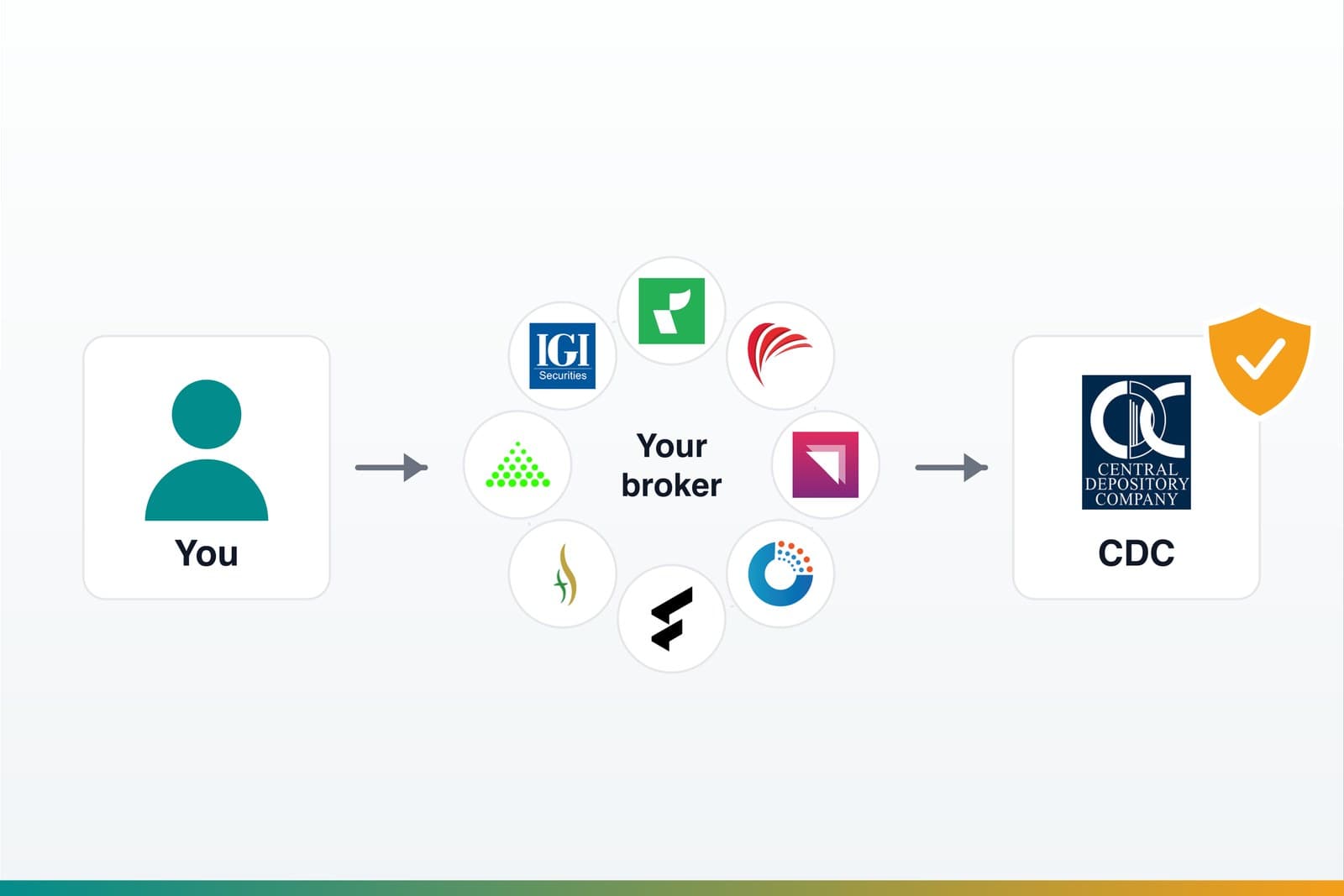
- Identity and bank account. A valid CNIC (or NICOP for non-residents) and a bank account. CDC's CES registration needs a CNIC, bank account, email, mobile number and a CDS (CDC) account, per CDC's description of the facility.
- A way to hold the shares. The PES manual lets you subscribe in one of three ways: with a CDC Investor Account, with a sub-account at a broker (the "Participant account" option), or through a Facilitation Account if you have neither. If you use the facilitation route, successful applicants' shares are parked at CDC and moved to your own account once you open one. You cannot sell shares you cannot hold, so opening an account first is simpler. See our guides to opening a PSX trading account and the CDC investor account vs sub-account.
- Funds in the right place. The full application amount is paid when you apply, not when you are allotted shares.
You can register and apply yourself, or authorise your broker (if you have a sub-account) or your bank to do it on your behalf. Registration is free and the PES registration form is available around the clock.
PES vs CES: the two e-IPO systems
Since PSX launched its e-IPO facility, retail subscription has moved online. The recent APAG prospectus states that retail investors participate in public subscription through only the e-IPO platforms provided by PSX and CDC.
| PES (PSX e-IPO System) | CES (CDC Centralized e-IPO System) | |
|---|---|---|
| Run by | Pakistan Stock Exchange | Central Depository Company (with 1LINK) |
| Website | eipo.psx.com.pk | cdceipo.com |
| Registration | Free, once. Register as an individual or corporate with CNIC/NICOP/UIN as login, OTP to your mobile, email link to set a password, then a PIN for subscriptions | Free, one-time self-registration |
| Payment | 1LINK (ATM, internet banking, mobile banking) or NIFT member banks | 1LINK member banks |
| Apply through | Yourself, your broker, or your bank | Yourself; sub-account holders can authorise their broker (a CDS Participant) to subscribe for them |
A few practical points from PSX's PES manual and the recent prospectuses:
- You can revoke a PES application only before paying for it.
- Payment limits. Older guides mention small caps on mobile wallet payments. The APAG prospectus says that 1LINK, through a memo dated 22 August 2024, instructed its member banks to remove transfer limits for e-IPO transactions, and that there is no transaction limit on e-banking payments.
- Applications run 24 hours during the subscription period, which closes at 11:59 pm on the last day, so do not leave it to the final evening if your bank app tends to time out.
- Refunds only go to the account used for the payment. PSX's manual is explicit that refunds are made only into the accounts through which the subscription was made.
Where do you find the prospectus? It is published in newspapers at least seven days before public subscription opens, and is available on the PSX website, the issuer's website, the consultant to the issue's website and the CDC e-IPO site. Draft prospectuses are placed on the PSX website for public comment before approval, which is how this article could describe Khaadi's structure before its subscription dates existed.
Minimum application and how to size it
Under the APAG draft prospectus the rule was:
- Apply for 500 shares or a multiple of 500 shares. Anything else is rejected.
- The minimum amount is the issue price multiplied by 500.
- Applications below the minimum amount are not entertained.
At the Rs 33 strike price reported for APAG, the minimum application was therefore 500 x Rs 33 = Rs 16,500. A 1,000-share application was Rs 33,000 and a 2,000-share application Rs 66,000. If a different offer prices retail at a discount, the arithmetic changes, so recompute from the prospectus.
What happens when the retail offer is oversubscribed
If the shares applied for by the public are more than the shares set aside for them, the prospectus describes computer balloting in the presence of PSX representatives. In the APAG draft prospectus the order was:
- All applications for 500 shares are accommodated first. If they cannot all be met, balloting is held among the 500-share applications only.
- If shares remain, all 1,000-share applications are served, with a ballot among them if needed.
- Then 1,500, then 2,000, with the same logic.
- Any shares left after that go to larger applications (2,000 each, then pro rata).
If the issue is oversubscribed in terms of amount, a similar preference order applies, with first preference to the 500-share applicants.
A hypothetical walk-through
Take an invented retail portion of 10,000,000 shares priced at Rs 33, with these invented applications:
| Application size | Number of applicants | Shares requested | Rupees paid in |
|---|---|---|---|
| 500 shares | 12,000 | 6,000,000 | Rs 198 million |
| 1,000 shares | 4,000 | 4,000,000 | Rs 132 million |
| 2,000 shares | 3,000 | 6,000,000 | Rs 198 million |
| Total | 19,000 | 16,000,000 | Rs 528 million |
Demand is 1.6 times the portion. Under the preference order above, all 12,000 applicants for 500 shares are served in full (6,000,000 shares), leaving 4,000,000. All 4,000 applicants for 1,000 shares are then served (4,000,000), leaving zero. The 3,000 applicants for 2,000 shares receive nothing, and their Rs 66,000 each is unblocked or refunded. Two lessons follow. In a structure like this one, a larger application does not buy a better chance, and cash is tied up for the whole window either way. Neither the numbers nor the outcome describe any real IPO, and a different prospectus may set a different order.
From allotment to listing day
After the public subscription closes, the regulations quoted in the prospectus give the issuer five working days to allot and issue shares against accepted applications and to unblock or refund the money of unsuccessful applicants. Shares are issued only in book-entry form and credited to the CDS account you named. If the issuer misses the deadline, the prospectus notes a penalty payable to PSX of Rs 5,000 per day.
Listing follows: PSX holds a gong ceremony and the shares begin trading in the regular market. For example, APAG's gong ceremony was reported on 15 September 2026 as the 12th listing of the calendar year, and Tasdeeq's was held on 25 August 2026 as the 11th. Once a company lists, its price discovery moves into the ordinary market, where ordinary risks apply: an IPO share can trade above or below the offer price. See our fees guide and capital gains tax guide for selling costs and tax.
Recent 2026 offers as illustrations
These are examples of how different offers have played out, not suggestions. Figures are as reported in the sources listed below.
- Agro Processors & Atmospheric Gases (APAG). Book building ran with a floor of Rs 32 and cap of Rs 44.80, and the strike price was reported at Rs 33. Coverage reported the book building portion oversubscribed about 1.84 times and the general public portion about 1.83 times, with the PSX gong ceremony held on 15 September 2026. An oversubscribed retail portion is the case where the balloting rules above matter.
- Tasdeeq Information Services. Reported strike price Rs 3.00 for 150 million IPO shares, retail portion oversubscribed 21.68 times from 11,358 applications, and a retail allocation lifted from 25% to 35%. Listed 25 August 2026.
- SE Fruits and Vegetable Limited. Book building was reported at the Rs 40 floor and oversubscribed about 1.6 times, and public subscription closed on 29 September 2026. On 16 October SECP said it had suspended proceedings after book building over discrepancies in the prospectus, and that the company then withdrew the IPO voluntarily and planned to return with enhanced disclosures, according to reports of its statement. Press reports said brokers and large investors were refunded first and that retail refunds were still being processed in mid-October, past the five-working-day deadline. The episode is a useful reminder that your money sits blocked during the process, that a prospectus is only as reliable as the audited numbers behind it, and that "approved" does not mean "safe".
- Khaadi Pakistan. As of 23 October 2026 its draft prospectus was on the PSX website for public comment, with book building and subscription dates still to be announced. Check the PSX listings pages for the final prospectus and dates.
A practical checklist before you apply
- Find the final prospectus (PSX, the issuer, the consultant or CDC) and read the front page: issue size, retail portion, price, dates, underwriters.
- Read the risk factors and the financial statements. Cash flow versus reported profit, receivables, related-party dealings and the use of proceeds matter more than the brand name. Our company research guide shows what to look for.
- Check the dates. Note the opening and closing of public subscription, and the refund and allotment deadlines.
- Register early on PES or CES, and confirm your CDC account or sub-account details.
- Fund the exact amount from a bank account in your own name; refunds return to the same account. Never borrow to apply, and remember an IPO is not a guaranteed gain.
- After listing, follow the company on its stock page, the announcements feed and the news page, and add the shares to your portfolio tracker with the actual allotment price.
Use Investify for your daily PSX workflow
Open market data, stock pages, charts, news, announcements, watchlists and portfolio tracking from one Investify account.
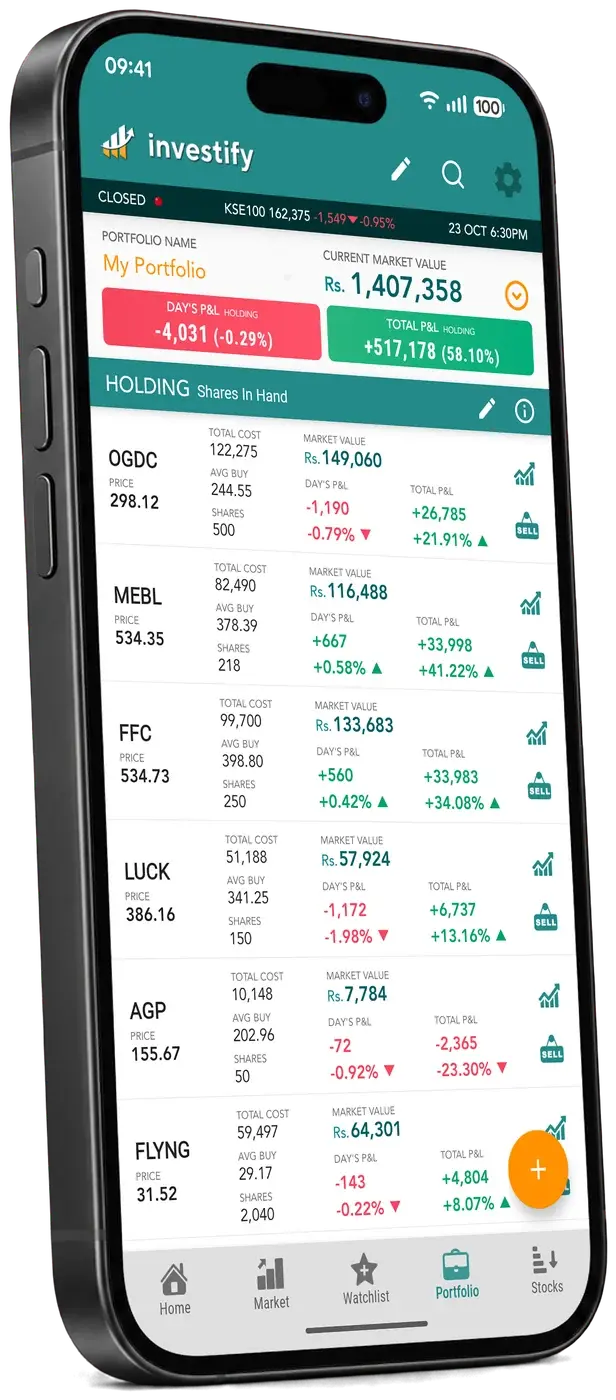
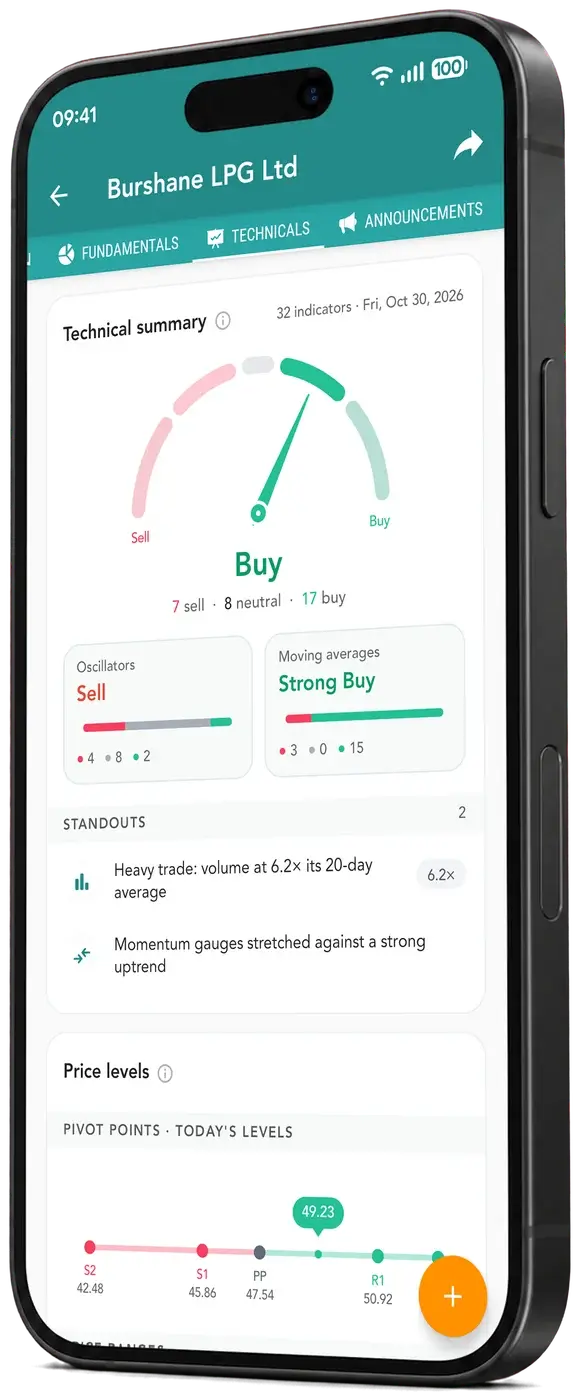
Follow PSX company announcements on InvestifyInvestify is a market-data and tracking app, not a broker and not an IPO subscription channel: you apply through PES, CES, your broker or your bank. Once a company has listed, Investify helps you follow its price, announcements and results.
Educational note
This article is for general education only. It is not investment, legal or tax advice and does not recommend applying for or avoiding any IPO. Rules, systems, price bands, minimums and timelines are set by SECP, PSX, CDC and each prospectus, and they change; the examples above come from draft and published prospectuses and press reports as of October 2026 and may be superseded. Always read the final approved prospectus for the specific offer, verify details with PSX and CDC, and consider speaking to a licensed adviser. Figures quoted for specific offers are as reported by the sources listed and have not been independently audited by Investify.
The bottom line
A PSX IPO for a retail investor boils down to a few mechanical steps: read the prospectus, register on PES or CES, apply in units of 500 shares or the multiple the prospectus allows during the subscription window, and wait for allotment and listing. If the offer is oversubscribed, balloting and a preference for smaller applications decide who gets shares, and refunds are due within five working days. The hard part is not the clicking. It is doing the research on the company and its audited numbers before your money is blocked, because that prospectus is the only document that stands between you and the sales pitch.
Related reading
Sources and references
- PSX - Electronic Initial Public Offering System (PES) user manual
- PSX - Draft Prospectus of Agro Processors & Atmospheric Gases Limited (July 2026)
- PSX - Draft Prospectus of Khaadi Pakistan Limited (October 2026)
- PSX - PSX digitises IPO subscription process through e-IPO facility
- Nukta - PSX welcomes Tasdeeq as 11th listing of CY2026
- Bol News - PSX lists 12th company in 2026 (APAG)
- Mettis Global - SE Fruits IPO: Will underwriters have to pick up the retail gap?
- Mettis Global - SE Fruits IPO: The CTIs said all was well. So what went wrong?