

Ask a relative where to put spare cash in Pakistan and you will hear three answers: buy prize bonds, put it in National Savings, or put it in the stock market. All three are common, all three are legal and regulated, and they behave very differently. One pays nothing unless you win a draw. One pays a fixed, taxed profit. One can pay dividends and grow, or fall.
This guide compares them side by side on return, risk, liquidity and tax, with the latest National Savings rates and 2026 draw dates, and a section on how to check prize bond results. Figures are as of November 2026 and come from National Savings, press reports of official draws and the State Bank of Pakistan (SBP). Rates and rules change, so use this as a map and confirm on the official sites before you act.
Key takeaways
- Prize bonds pay no profit. You get your face value back whenever you redeem, plus a small chance of a prize in a quarterly draw. Prize winnings are taxed at 15% (filers) or 30% (non-filers).
- National Savings certificates pay a stated profit reviewed regularly. Rates effective 21 October 2026 run from about 10% on a savings account to 12.96% on Behbood certificates, with 15% withholding tax for filers and 30% for non-filers.
- PSX shares carry no guarantee. They can pay dividends and appreciate, but prices fall as well as rise, so they suit money you will not need soon.
- Inflation matters. Headline inflation was 11.1% in August 2026, so a product that pays less than that loses purchasing power, and tax makes it worse.
- No option is "best". The right mix depends on your time horizon, need for certainty and tolerance for loss.
Prize bonds: what they are and what is valid in 2026
A prize bond is a government bearer security that pays no interest. Instead, each draw selects winning numbers that receive cash prizes. When you redeem a bond you get its face value back. Most buyers treat it as a low-cost way to hold money with an upside.
According to National Savings' draw pages, the denominations currently in the draw lists are:
| Type | Denominations | Notes |
|---|---|---|
| Regular prize bonds (bearer) | Rs 100, Rs 200, Rs 750, Rs 1,500 | No profit. Prize only if your number is drawn |
| Premium Prize Bonds (registered) | Rs 25,000, Rs 40,000 | Registered in your name, quarterly prize draws plus profit paid every six months |
The older Rs 7,500 and Rs 15,000 bonds do not appear on National Savings' current lists. They were withdrawn from sale in stages and holders were given deadlines to exchange them. If you find old ones in a drawer, ask the SBP Banking Services Corporation or National Savings what can still be done rather than assuming they have no value.
Draw schedule for 2026
National Savings runs each denomination quarterly. Based on the 2026 schedule reported by TechJuice (which attributes it to National Savings), the regular bonds fall on the 15th or 16th of the month and the premium bonds on the 10th:
| Denomination | 2026 draw months |
|---|---|
| Rs 750 | January, April, July, October |
| Rs 100 and Rs 1,500 | February, May, August, November |
| Rs 200 | March, June, September, December |
| Premium Rs 25,000 and Rs 40,000 | March, June, September, December (10th) |
Late in the year, the remaining 2026 draws are the Rs 100 and Rs 1,500 draws on 16 November, the premium draws on 10 December and the Rs 200 draw on 15 December. If a date falls on a public holiday, the draw moves to the next working day. National Savings announces the following year's schedule near the end of the year, so look for the 2027 calendar there.
What the prizes look like
Two recent draws show the structure. In the Rs 750 draw on 15 October 2026 (Draw No. 108), the first prize was Rs 1,500,000 for one bond, the second prize Rs 500,000 for three bonds, and the third prize Rs 9,300 for 1,696 bonds, a total of 1,700 winning numbers. In the Rs 1,500 draw on 17 August 2026 (Draw No. 107), the first prize was Rs 3,000,000, the second Rs 1,000,000 for each of three bonds, and the third Rs 18,500 for 1,696 bonds.
For Premium Prize Bonds, National Savings lists top prizes of Rs 30 million for the Rs 25,000 bond and Rs 80 million for the Rs 40,000 bond. Prize money and profit are credited straight to your bank account, and National Savings says no claim form is needed. Senior citizens and women have separate counters when buying.
The odds, honestly
National Savings' pages do not headline how many bonds of each denomination are outstanding, so we cannot give a precise probability. Here is how to think about it.
The prize pool of the Rs 750 draw above works out to roughly Rs 18.8 million (1,500,000 + 3 x 500,000 + 1,696 x 9,300). Divide that by the number of bonds in circulation to get the average prize per bond. As a purely hypothetical illustration, if 10 million Rs 750 bonds were outstanding, 1,700 winners would mean about 17 in every 100,000 bonds win anything in a given draw, and the average prize per bond would be about Rs 1.88 a quarter, or roughly 1% of the Rs 750 face value a year, before tax. The real circulation figure will differ, but the shape is the point: for most holders the expected prize is small and highly uneven, with a few large winners and a very long tail of people who win nothing.
How to check prize bond results
The official tool is National Savings' Draw Search at savings.gov.pk. This is the source to trust over any app, social post or video.
- Open the Draw Search page on the National Savings website.
- Choose your denomination from the dropdown, including the Rs 25,000 premium option.
- Choose the draw date from the "Select Draw Date" list.
- Enter bond numbers either as a range (a start and end number, such as 122000 to 122099) or as a comma-separated list of individual numbers.
- Click Search Numbers.
You can also download the full list for any draw from the Download Draws page, which has a separate list for Rs 100, Rs 200, Rs 750, Rs 1,500 and each premium bond. The site carries a notice that its results database is still being updated, so some dates may be missing, and that errors and omissions are possible. If you appear to have won something sizeable, confirm with your nearest National Savings Centre or the State Bank's Banking Services Corporation before you celebrate or share your bond number with anyone.
National Savings certificates and accounts
National Savings, under the Central Directorate of National Savings, offers the schemes most people think of as "savings certificates". Rates are revised periodically. The latest notice on its site takes effect on 21 October 2026:
| Scheme | Rate / return | Indicative payout |
|---|---|---|
| Special Savings Certificates (3 years) | 12% rising to 12.8% | Rs 6,000 per Rs 100,000 each half-year, with the last payment at Rs 6,400 |
| Regular Income Certificates (5 years) | 12.12% | Rs 1,010 per Rs 100,000 a month |
| Behbood, Pensioners' Benefit and Shuhada schemes | 12.96% | Rs 1,080 per Rs 100,000 a month |
| Short Term Savings Certificates | 11.12% to 11.72% depending on tenor | Rs 2,780 to Rs 11,720 per Rs 100,000, depending on tenor |
| Savings Account | 10% | Up to three withdrawals a week |
| Sarwa Islamic accounts (Shariah-compliant) | 11.84% to 12.12% on terms; 11.84% on savings | Per scheme terms |
| Defence Savings Certificates (10 years) | Cumulative over the 10-year term, see the DSC table on the site | At maturity |
National Savings states that these returns are subject to 15% withholding tax for filers, 30% for non-filers and 2.5% zakat where applicable. Defence Savings pays on a cumulative, year-by-year scale, so use the certificate table on the site rather than a single headline rate. Behbood certificates are aimed at widows and senior citizens, and Sarwa is the Shariah-compliant range.
What a certificate really pays: an example
Suppose a filer puts Rs 1,000,000 into a Regular Income Certificate at 12.12%:
- Gross profit: Rs 1,010 x 10 (per Rs 100,000) a month = Rs 10,100 a month, or Rs 121,200 a year.
- Tax at 15%: Rs 18,180.
- Net profit: Rs 103,020, about 10.3% of the principal.
A non-filer pays 30%, which is Rs 36,360 in tax and leaves Rs 84,840, about 8.5%. Compare 10.3% to inflation of 11.1% in August 2026 and you can see the issue: after tax, even a headline 12% product can fall slightly behind inflation. That is not an argument against certificates, which exist for safety and predictability, but it explains why many savers look beyond them for part of their money. If you are not on the Active Taxpayers List, see our guide to filer vs non-filer tax rates.
PSX shares: a different kind of asset
The Pakistan Stock Exchange sits at the opposite end of the risk spectrum. When you buy a share you own part of a business. You can earn:
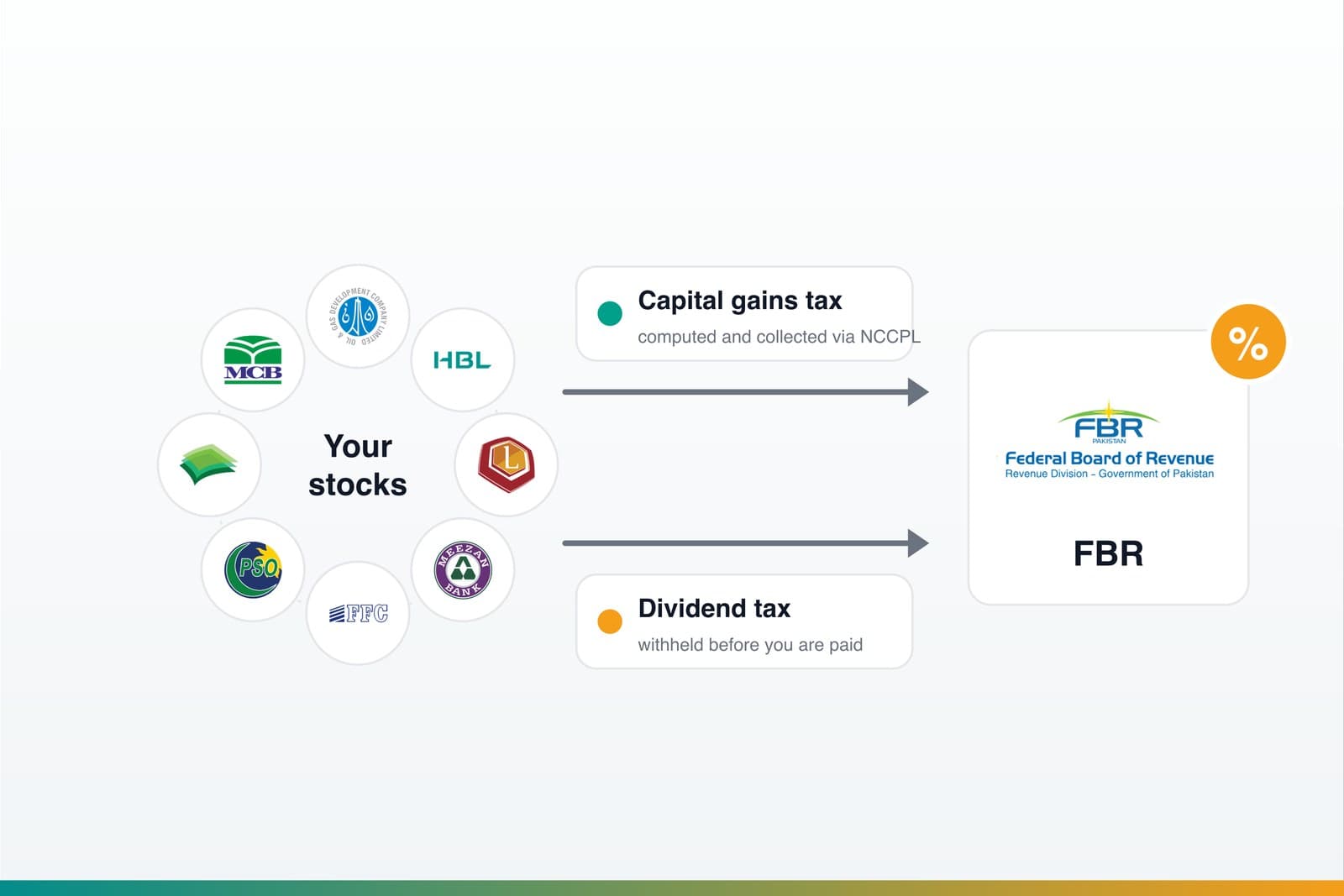
- Dividends, when a company pays out profit. Ordinary dividends are generally withheld at about 15% for filers and 30% for non-filers.
- Capital gains, when you sell for more than you paid, taxed at 15% for filers on recently acquired shares. Our guide to capital gains tax and dividend tax on PSX stocks explains the details.
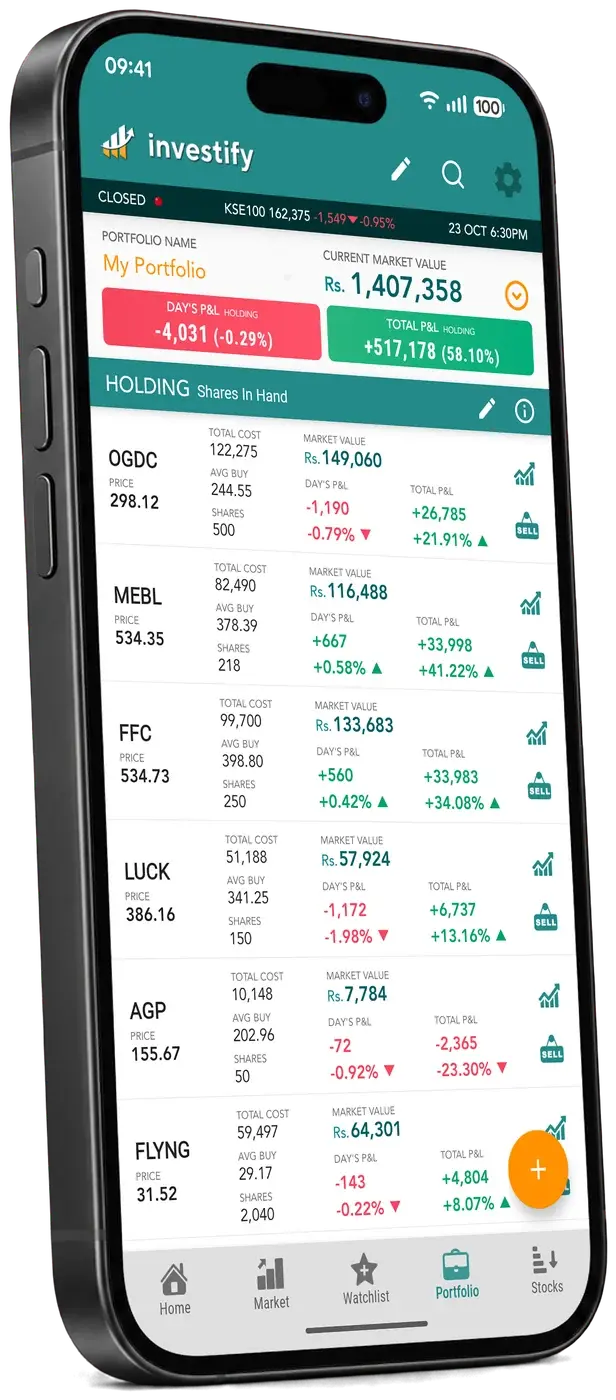
What you do not get is a guaranteed return or a guaranteed return of your capital. The KSE-100 rose about 44% in rupee terms in FY26, according to broker estimates reported by Profit, but that is a single year. Past gains do not predict future results, and share prices can fall sharply, including in a single year. You can follow the benchmark on Investify's KSE-100 page, browse current prices and dividends on the stocks page, or gauge market mood on the PSX Fear & Greed index. None of these is a recommendation to buy anything.
See what the market actually offers
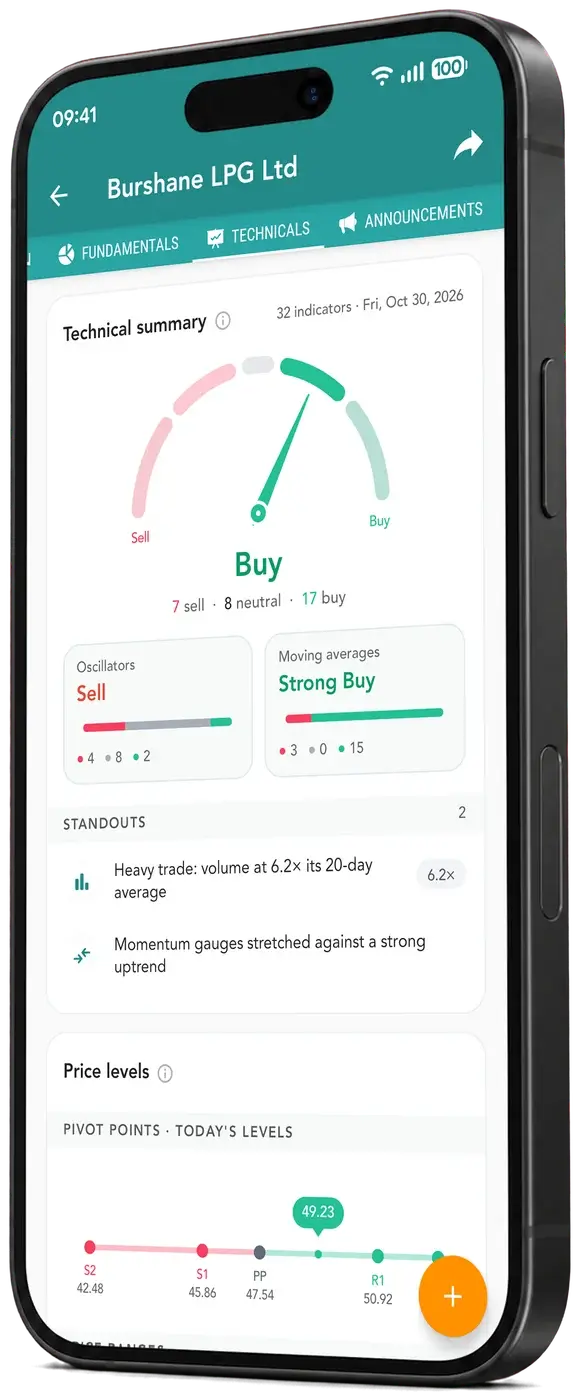
Browse live PSX prices, dividends, fundamentals and announcements for listed companies, so you can compare real numbers instead of guessing.
Explore PSX stocksSide-by-side comparison
| Regular prize bond | Premium prize bond | National Savings certificate | PSX shares | |
|---|---|---|---|---|
| Regular profit | None | Profit every six months (rate not stated on the page reviewed) | Stated rate, e.g. 12.12% on Regular Income | Dividends, not guaranteed |
| Chance of extra | Prize draw each quarter | Prize draw each quarter | None | Capital gain possible |
| Principal risk | Face value returned | Face value returned | Face value returned | Price can fall; loss possible |
| Tax | 15% / 30% on prizes | Withholding tax applies | 15% / 30% on profit | 15% / 30% on dividends; CGT on gains |
| Liquidity | Redeem on request at the issuer | Redeem on request at the issuer | Early encashment rules apply | Sell any trading day, price not guaranteed |
| Best suited to | Small, patient cash with tiny upside | Larger holders wanting prize chance plus profit | Predictable income and safety | Money you can leave for years |
| Main drawback | No profit; inflation erodes value | Prizes depend on luck | Fixed return may trail inflation after tax | Volatility and loss risk |
A short note on Premium Prize Bonds: National Savings says they are transferable and can be pledged, and that they are exempt from zakat deduction, but the page we reviewed does not state a profit rate. Check the current rate before comparing them to certificates.
Who each option may suit
None of this is a recommendation. It is a way of matching the tool to the job:
- Money you may need at short notice usually wants safety and liquidity, which points toward savings accounts, short-term certificates or a bank, not shares.
- Money for a goal in one to three years, such as a deposit or a wedding, usually wants a stated return and little price risk.
- Money you will not touch for many years can tolerate the swings of shares, which is where dividends and growth have the most time to work.
- A small amount you are happy to leave alone is what prize bonds are really for, with the understanding that the main prize is that your money is safe.
A common approach is to keep an emergency fund in safe products first, and only then consider shares with the rest. For a gentle starting point on the equity side, see how much money you need to start investing on PSX.
A note on Shariah
Many Pakistanis want to know whether these options are permissible. Opinions differ. A ruling issued through Darul Iftaa Madrassah In'aamiyyah (South Africa) and published on Askimam.org holds that investing in in'aami bonds is impermissible, citing elements of interest and chance and referring to the view of the late Grand Mufti of Pakistan, Mufti Rashid Ludhyanvi. National Savings also runs the Shariah-compliant Sarwa accounts under its Rafa brand. For PSX shares, Shariah-compliant stocks are tracked by indices such as KMI-30. If this matters to you, ask a qualified scholar you trust.
Educational note
This article is general educational information, not financial, investment, tax, legal or religious advice, and it does not recommend buying, selling or holding any bond, certificate or security. Rates, tax treatment, denominations and draw dates are set by the government and can change, and some details here come from press reports of official announcements. Verify them on savings.gov.pk, with the State Bank of Pakistan and with the Federal Board of Revenue before you decide. Past market returns do not predict future returns. Investify is a PSX market-data and portfolio-tracking app and is not a broker, bank or adviser.
The bottom line
Prize bonds, National Savings and PSX shares sit on a ladder of certainty. Prize bonds pay nothing but offer a draw ticket. National Savings certificates pay a taxed, stated profit that may only just keep up with inflation after tax. Shares carry no promises but can offer dividends and growth for patient money. Know which job you want your money to do, check your bond numbers only on the official Draw Search, and confirm current rates before you commit.
Related reading
Sources and references
- National Savings - Prize BondsDenominations, 2026 draw schedule and tax on prizes (15% filers, 30% non-filers).
- National Savings - Download DrawsDraw lists for Rs 100, 200, 750, 1,500 and the two premium bonds.
- National Savings - Draw SearchOfficial prize bond result checker.
- National Savings - Premium Prize BondRegistered bonds, quarterly draws, top prizes, purchase documents.
- National Savings - Latest profit ratesRates effective 21 October 2026, with filer and non-filer withholding tax.
- National Savings - ProductsSchemes, tenors and eligibility.
- TechJuice - Prize bond draw dates and cities announced for 2026Press report of the 2026 draw calendar.
- Daily Pakistan - Rs750 prize bond draw, 15 October 2026Prize structure of Draw No. 108.
- Aaj News - Rs1,500 prize bond draw, 17 August 2026Prize structure of Draw No. 107.
- Dawn - SBP keeps interest rate unchanged at 11.5pcHeadline inflation of 11.1% in August 2026.
- Profit - KSE-100 outperforms all asset classes in FY26FY26 KSE-100 return of about 44% in rupee terms.
- Askimam.org - ruling on in'aami bondsOne scholarly view on prize bonds.